
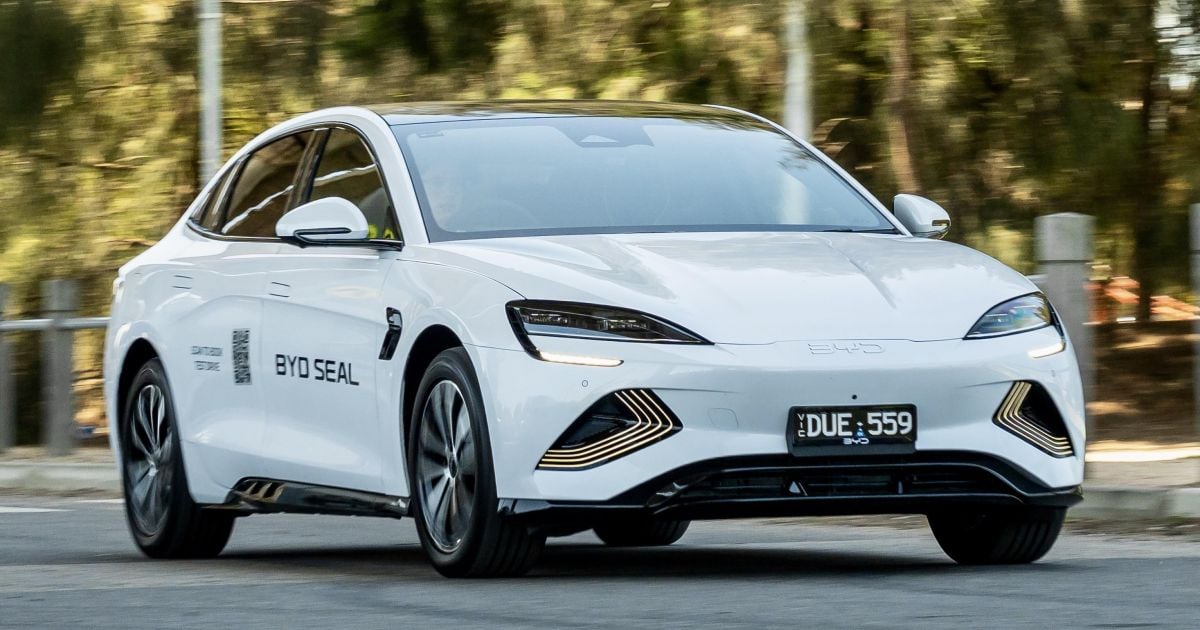
The BYD Seal has been available in Australia since 2023, but even with several years to dig its claws (or flippers?) into our market, the mid-size electric sedan remains somewhat of an EV underdog.
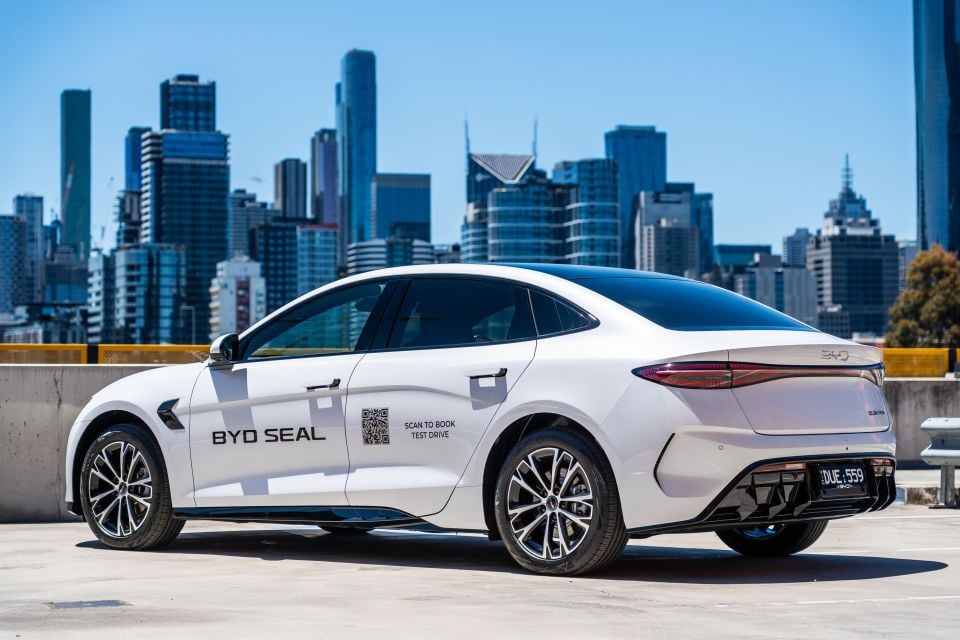
BYD has become an EV powerhouse since launching in Australia in 2022. It’s already regularly placing within the list of top-10 best-selling auto brands, consistently exhibiting otherworldly year-on-year sales growth, and it has much bigger plans.
Its lineup consists entirely of electric or plug-in hybrid (PHEV) vehicles, with the Shark 6 PHEV ute almost certain to be the Chinese brand’s sales winner for 2025. The Sealion 7 mid-size electric SUV isn’t too far behind either, nor is the Sealion 6 mid-size PHEV SUV.
But for BYD, a trend seems to be emerging. It’ll launch a new, hotly anticipated model, which will become a hit almost instantly, but then it’ll be overshadowed by the next high-profile release. This has happened with the Atto 3 small/medium electric SUV (granted, it was BYD Australia’s onlymodel for a time), the Sealion 6, and the Seal on test here.
Such is the progression of a rapidly expanding model range, but it does mean cars like the Seal, which once challenged the dominant Toyota Camry for sales albeit briefly, have now fallen by the wayside.
With 157 sales recorded in November 2025, the Seal is now BYD’s second-lowest selling model, dwarfed by the Shark (1217) and the Sealion 7 (1040). The Camry managed 801 in the same month, while the Seal’s arch-nemesis, the Tesla Model 3, found 433 new homes.
Sales for cars like these may be down, but with only a handful of competitors, the Seal is still the third-best seller in the segment. So, in context, the Seal is often overlooked but still sells in reasonable numbers, which is why we consider it an underdog.
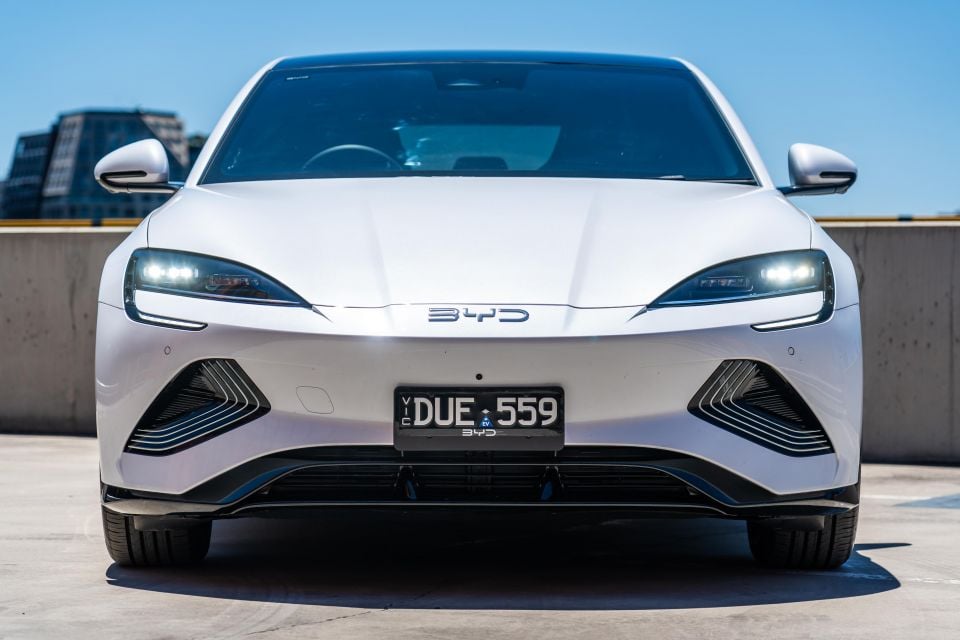
The Seal has barely changed since it launched locally in late 2023, despite some updates rolling out overseas. It still aligns with the brand’s established identity, particularly compared with other Ocean Series models, as evidenced by even in the base-spec 2026 BYD Seal Dynamic you see here.
How does it stack up as we approach 2026, and should it be selling better?
How much does the BYD Seal cost?
The entry-level BYD Seal Dynamic is priced at $46,990 before on-road costs.
| Model | Price before on-road costs |
|---|---|
| 2026 BYD Seal Dynamic | $46,990 |
| 2026 BYD Seal Premium | $52,990 |
| 2026 BYD Seal Performance | $61,990 |
Given the Model 3 has consistently been a mid-$50,000 player, and incoming mid-size electric sedans like the Mazda 6e appear to be using the $55,000 mark as a boundary, it almost seems mandatory that all similar models be priced around the same level.
Instead, Australia gets two Seal variants that are cheaper than the most affordable Model 3, with our base tester some $8000 below the range-opening Tesla. After comparing spec sheets between the two, that seems like fantastic value.
The only other electric sedan currently on sale is the Polestar 2, but that’s pricier at $62,400 before on-roads. All these mid-size sedans are in a never-ending pursuit of the hybrid Camry though, which starts at $39,990 before on-roads.
To see how the BYD Seal stacks up against its rivals, use our comparison tool
Let us help you find your new car
Buy your new car without the stress. It’s fast, simple and completely free.
Great service from Travis and team, second time I have used this business would not hesitate to recommend them to anyone
Craig C.
Purchased a Ford Ranger in Sunshine Coast, QLD
CarExpert helped Craig save thousands on his Ford Ranger, now let us save you on your next new car.
What is the BYD Seal like on the inside?
Comfortable and reasonably well-appointed, but it’s starting to show its age.
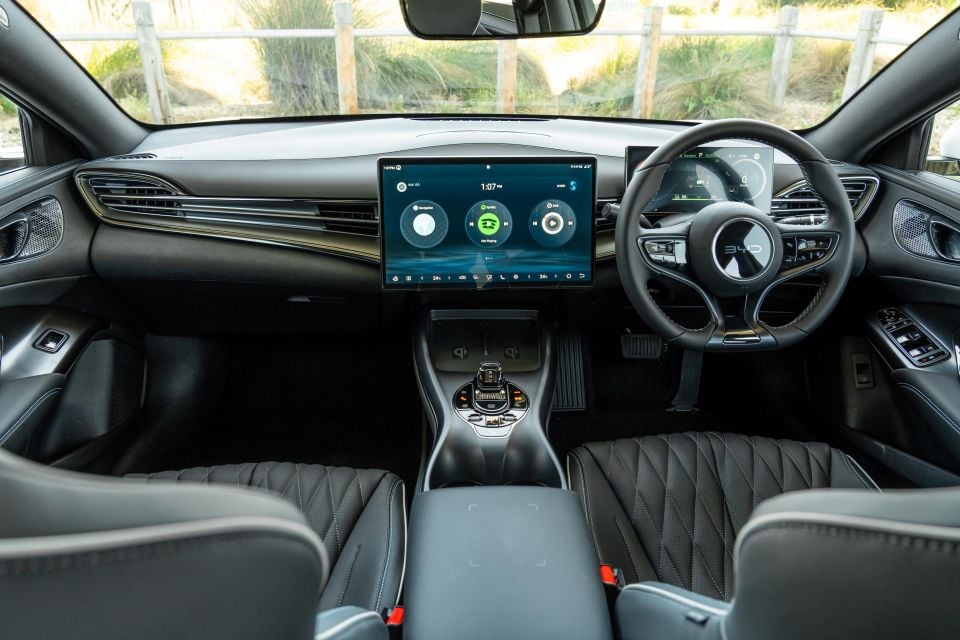
While that likely has something to do with its old-ish design, we suspect it’s more a reflection of the pace of the Chinese car industry. Comparing the Seal’s cabin to those of newer BYDs like the Sealion 5 or Atto 2, we believe those cars look fresher.
Mind you, the Seal this year received an interior overhaul in its domestic market, as we reported in 2024. Unfortunately, there has been radio silence on this update being brought to Australia since then.
That’s a shame, because the updated interior looks much sleeker, and if BYD is looking to steal sales from a vehicle as untouchable as the Model 3, the Seal really needs to put its best flipper forward.
That isn’t to say the current Seal’s interior is unpleasant, though.
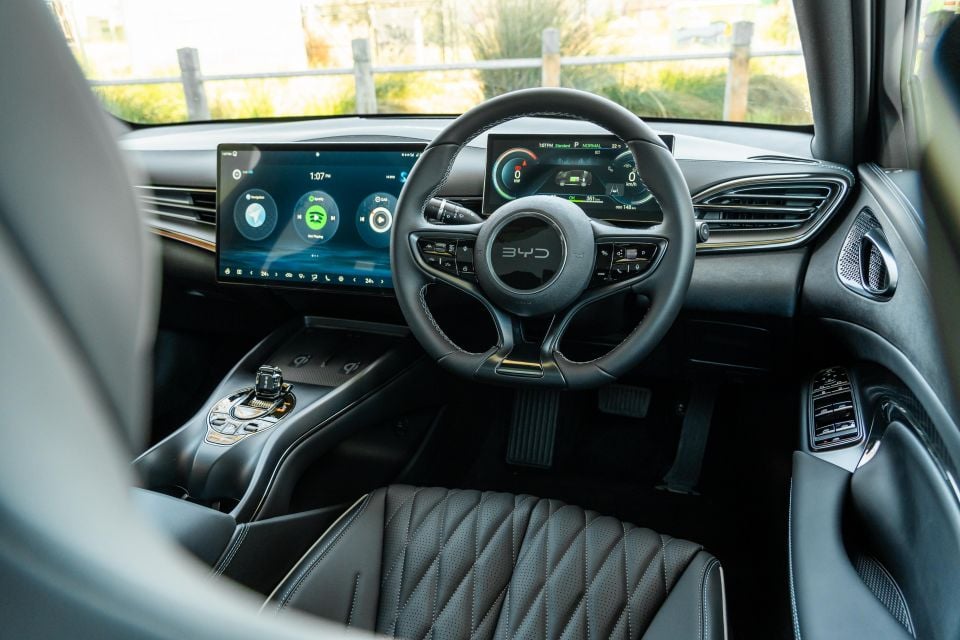
The most significant change with that overseas update is a new steering wheel. Imagery shows it’s much bulkier and premium-looking, doing away with the cheap plastic centre pad and gloss-black buttons seen on our tester, while remaining consistent with the rest of BYD’s range.
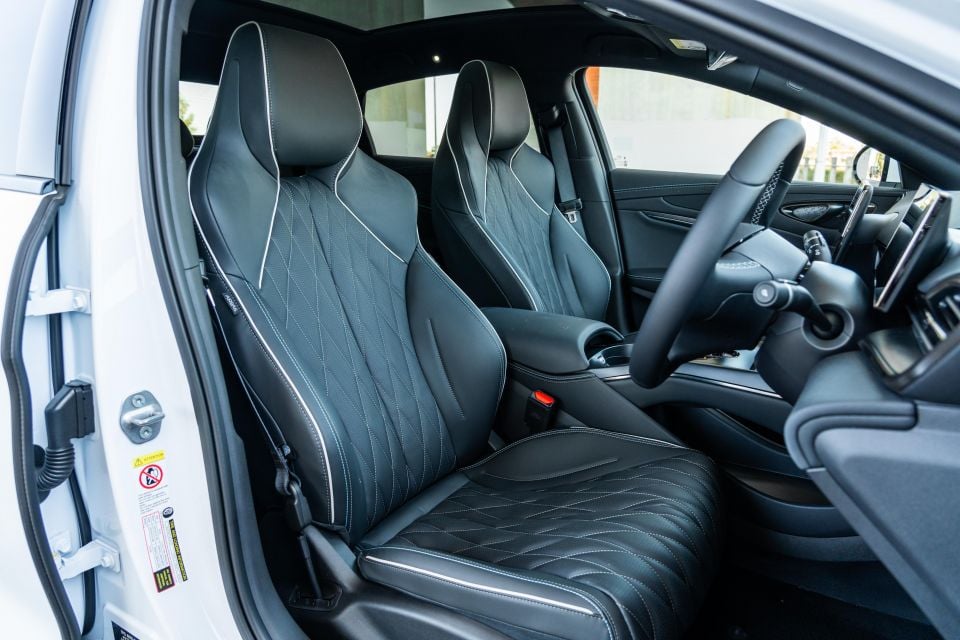
The tiller we get is still nicely sized and its leather finish is pleasant to the touch, but a significant downside is that there’s no tilt adjustment. This compromises the seating position, as the powered driver’s seat can be lowered more than you might expect and is actually quite comfortable, despite the EV battery under the floor.
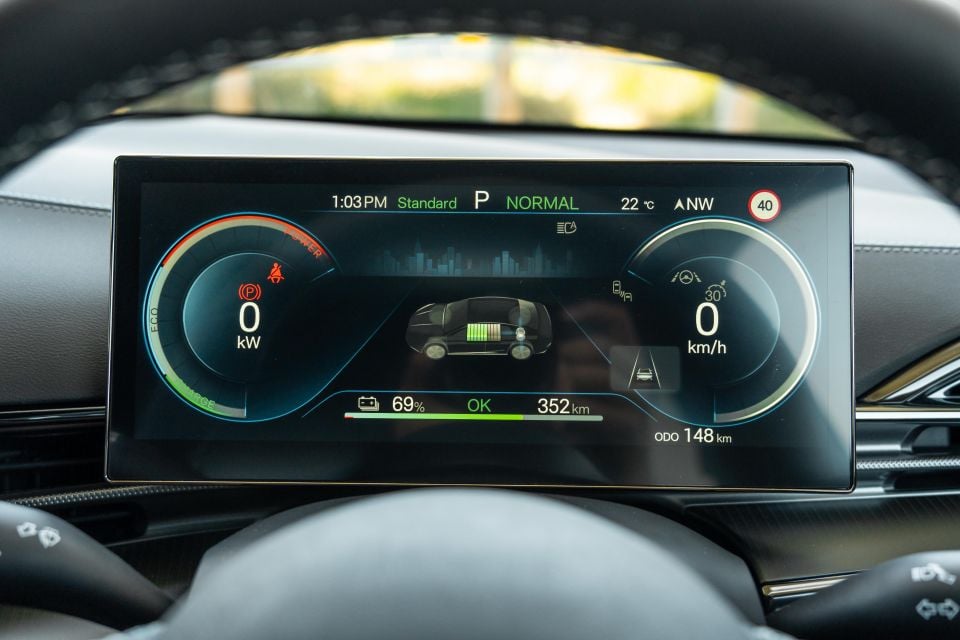
What you’re left with is a high steering wheel and a seating position that’s necessarily higher than you’d probably like, particularly if you’re on the shorter side like I am. It at least keeps the entire rectangular instrument display unobstructed, which we find to be a little tacky in presentation but very usable.
This 10.25-inch screen feels a bit like an afterthought, as do its graphics, which use a font that looks like a Microsoft Word default. There’s a lot more effort put into the designs of these things in newer BYDs, but at least functionality isn’t compromised.
A button on the right of the steering wheel will repurpose the audio control buttons to manipulate the instrument display instead, revealing a handful of menus with a vast array of information. There are no real complaints here, aside from the fact it doesn’t look particularly slick.
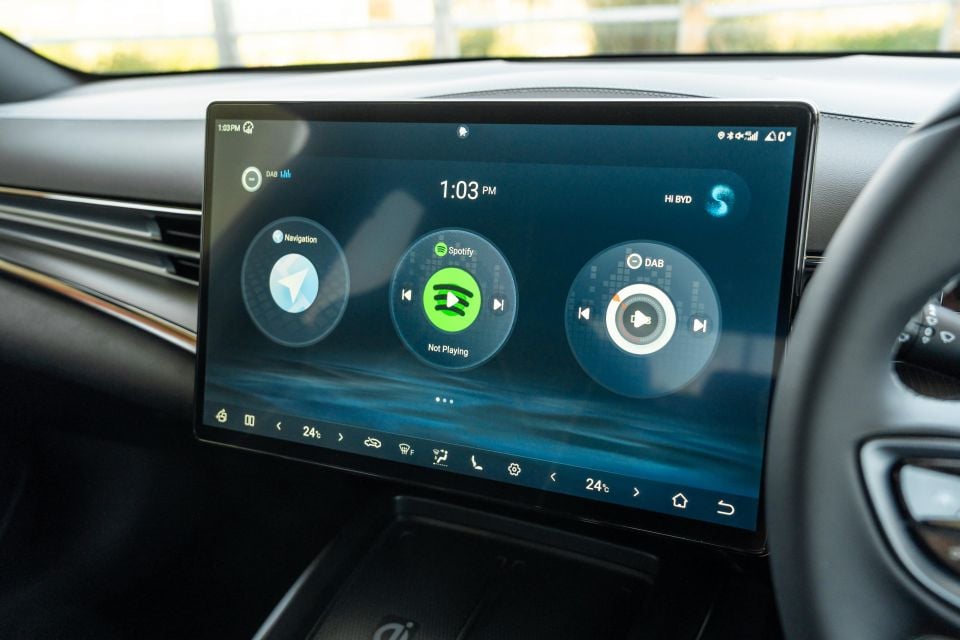
As is trendy with the vast majority of Chinese brands, the 15.6-inch infotainment screen dominates the Seal’s cabin, and still rotates pointlessly in trademark BYD fashion. Its graphics also appear dated and we dislike that this is the home of all interior controls.
That includes the climate system, for which a dedicated menu is accessible via a shortcut on the ribbon at the bottom of the screen. The same ribbon also contains ‘shortcut’ controls for temperature and air recirculation, though BYD has incorporated the same sneaky gesture as in its other cars.
Using three fingers, you can swipe up or down on the screen to adjust temperature, or sideways for fan speed. If you know that, this is brilliant (but not as brilliant as, I don’t know, buttons), but it’s held back by a small integration quirk.
If Apple CarPlay (and likely also Android Auto) is active, the screen will register a touch when you go to do the three-finger swipe. That means it’ll open whatever you’ve placed your hand over as if you had done it intentionally, which is obnoxiously unexpected when you’re on the move – that doesn’t happen with real buttons.
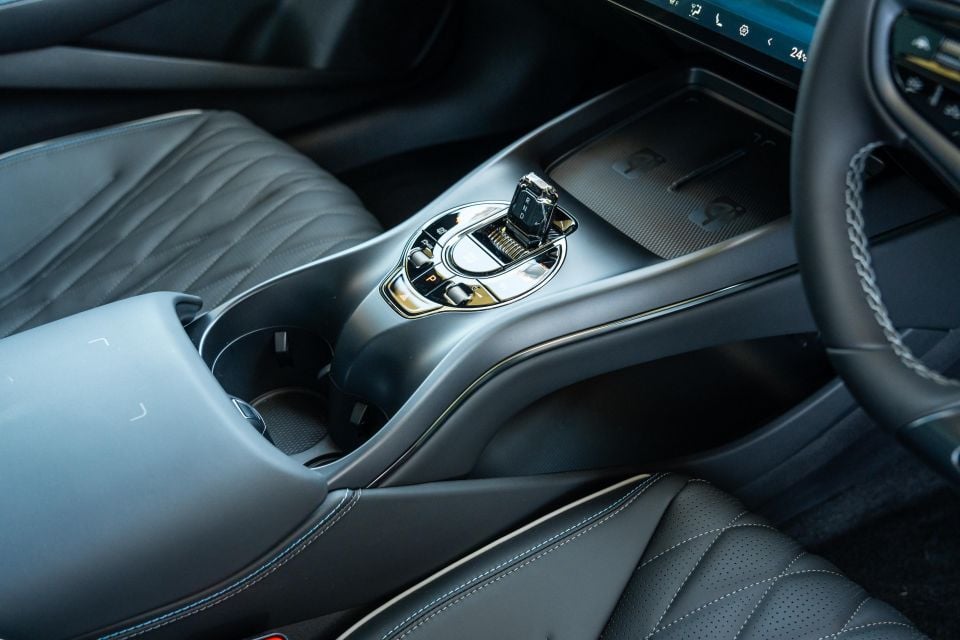
Wireless Apple CarPlay at least worked reliably during our week with the car, and the screen is easy enough to navigate once you have a basic idea of where everything is. Unfortunately, nearly every vehicle function is buried within any number of menus, save for the basic controls around the stylish gear selector.
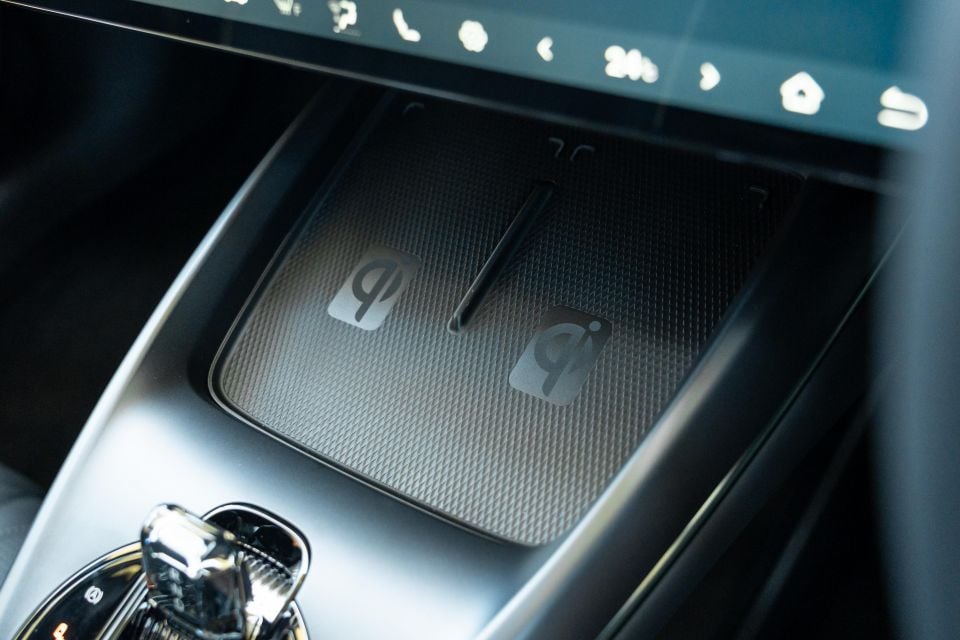
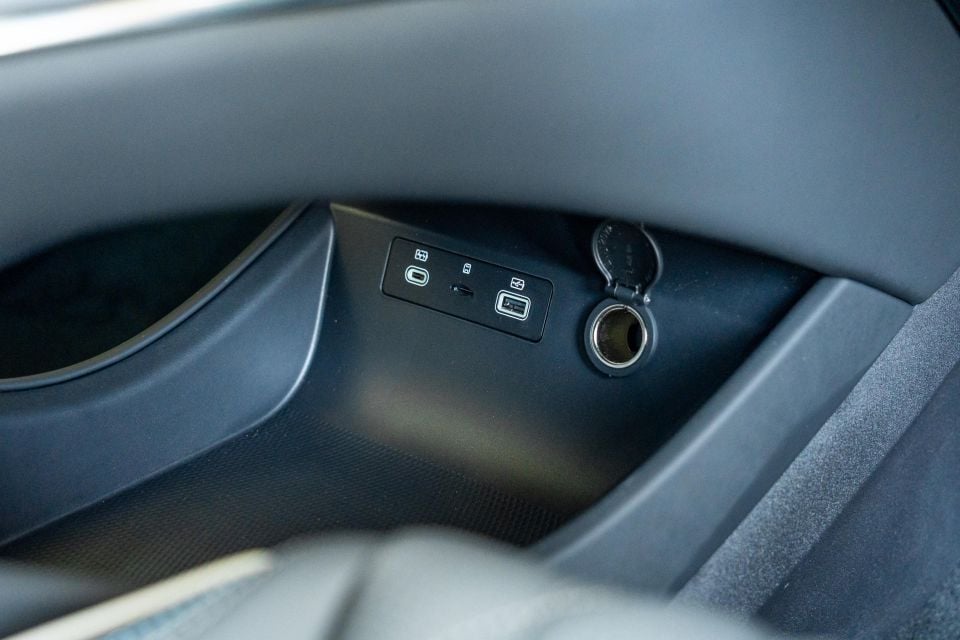
As for storage, front passengers are well catered for. There’s a sizeable tray under the centre console with USB-A and -C ports, a 12V outlet, and an SD card slot, which nicely hides small bags, or phones if you don’t want to use the dual wireless chargers above.
The sleek centre console flows backwards into two convenient cupholders, followed by a padded centre armrest with a decently sized storage box underneath. There are also bottle holders in the door cards, but they aren’t very big. And putting a bottle on the driver’s side will block the boot-opening button.
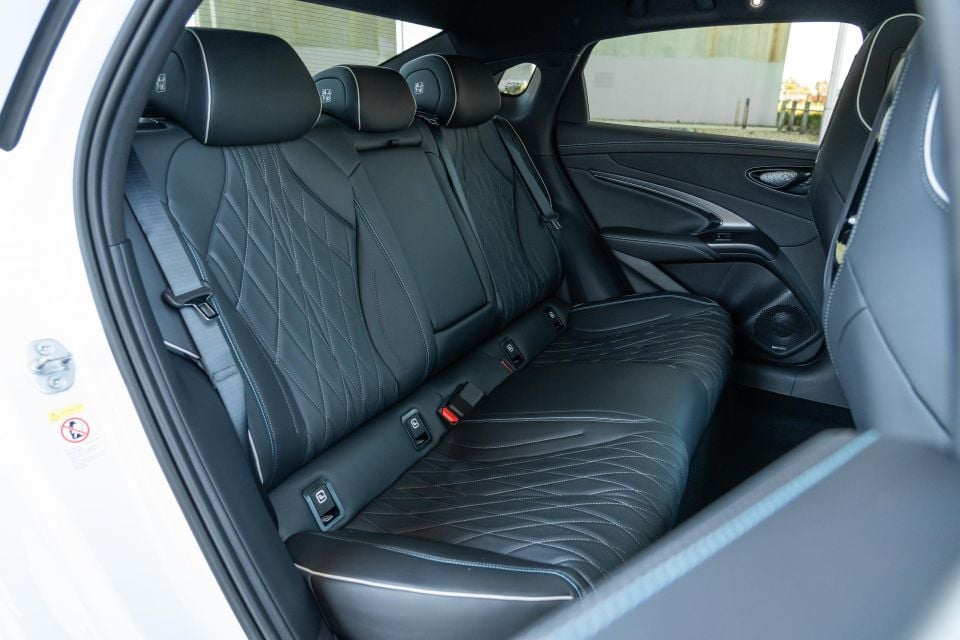
The second row, meanwhile, is very spacious, but somewhat awkward to sit in. Multiple factors contribute to this: the bench’s base is very low with compromised thigh support, the floor seems high probably due to the EV battery packaging, and the seatback is too far reclined.
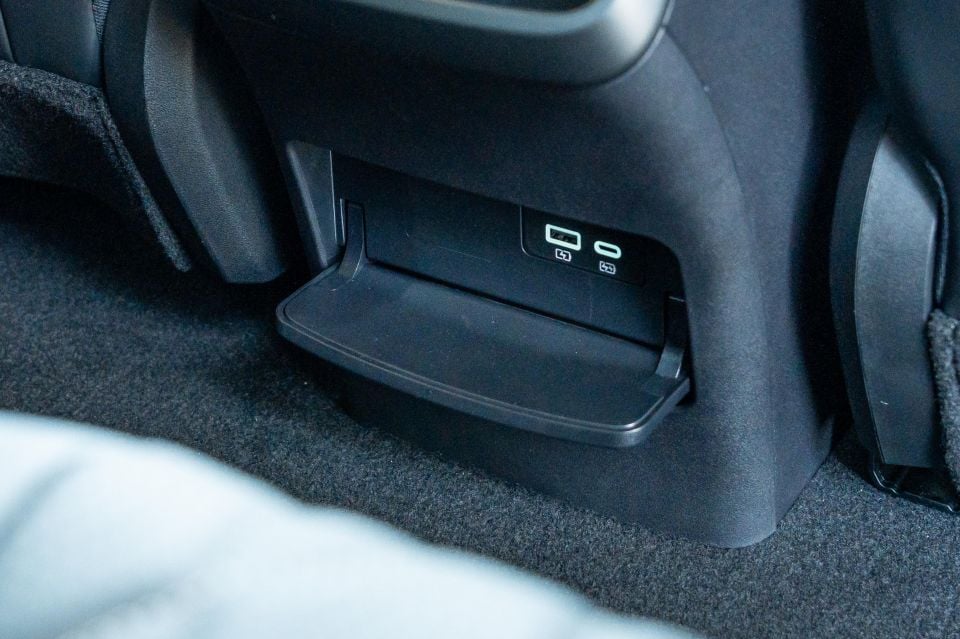
There’s no way to adjust any of that either, as pulling on the inviting-looking handle on top of the seat just releases the latch to fold it flat. Mind you, strange second-row ergonomics aren’t new for Chinese vehicles, and at least you get a soft fold-down armrest with cupholders, and USB-A and -C ports behind a flap on the back of the centre console.
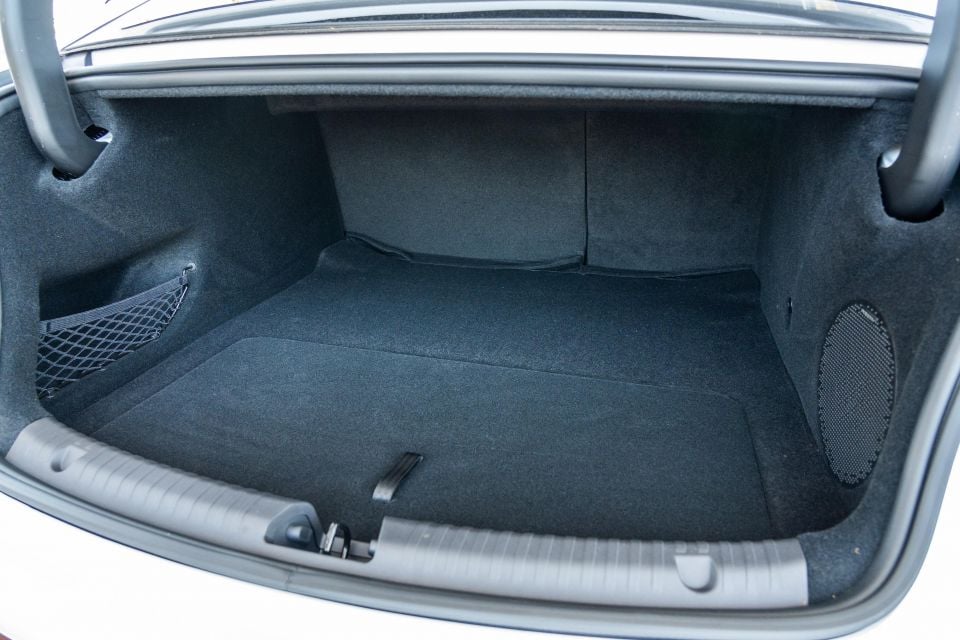
Uniquely for a sedan at this end of the market (let alone a base-level trim), the Seal offers a powered bootlid. This feels unnecessary, but it does make it easier to open if your hands are full, so why not?
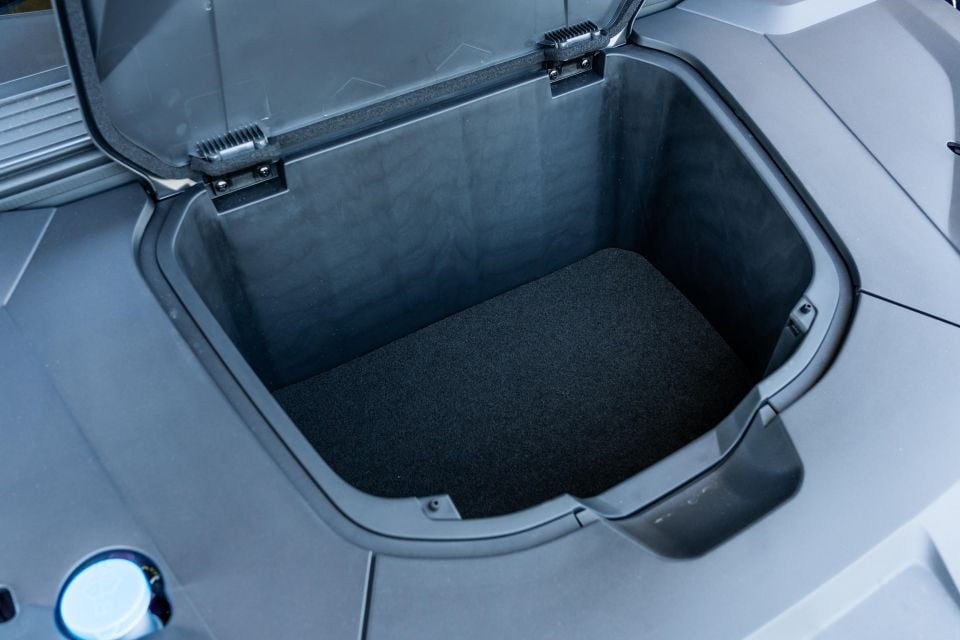
The boot’s 400 litres of capacity is noticeably smaller than the Camry’s 524L and the Model 3’s 594L, and the opening is somewhat narrow. If you need more room, there’s a cubby under the floor and a 53L box under the bonnet, but don’t expect anything more than a tyre repair kit.
| Dimensions | BYD Seal |
|---|---|
| Length | 4800mm |
| Width | 1875mm |
| Height | 1460mm |
| Wheelbase | 2920mm |
| Cargo capacity | 400L (boot) 53L (under-bonnet storage) |
To see how the BYD Seal stacks up against its rivals, use our comparison tool
What’s under the bonnet?
The Seal Dynamic is powered by a single, rear-mounted electric motor, fed by a 61.44kWh lithium iron phosphate (LFP) BYD Blade battery. Peak outputs are listed at 150kW of power and 310Nm of torque.
| Specifications | BYD Seal Dynamic |
|---|---|
| Drivetrain | Single-motor electric |
| Battery | 61.44kWh LFP ‘BYD Blade’ |
| Peak power | 150kW |
| Peak torque | 310Nm |
| Drive type | Rear-wheel drive |
| Kerb weight | 1922kg |
| 0-100km/h (claimed) | 7.6 seconds |
| Energy consumption (claimed) | – |
| Energy consumption (as tested) | 15.6kWh/100km |
| Claimed range (WLTP) | 460km |
| Max AC charge rate | 7kW |
| Max DC charge rate | 110kW |
The Chinese brand doesn’t quote its own energy consumption figure to back up its claimed WLTP range of 460km.
Our week with the car involved almost entirely highway driving, where EVs are least efficient, along with a little time in Melbourne’s outer suburbs. Efficiency of of less than 16kWh/100km is pretty good, though we saw an even more impressive figure of 12.98kWh/100km in a recent review of a Tesla Model 3.
It’s also worth noting that while the base Dynamic can only charge at a maximum DC rate of 110kW, both the Premium and Performance models can handle up to 150kW of charging capacity.
To see how the BYD Seal stacks up against its rivals, use our comparison tool
How does the BYD Seal drive?
The Seal’s solid, and that’s evident before you even start moving.
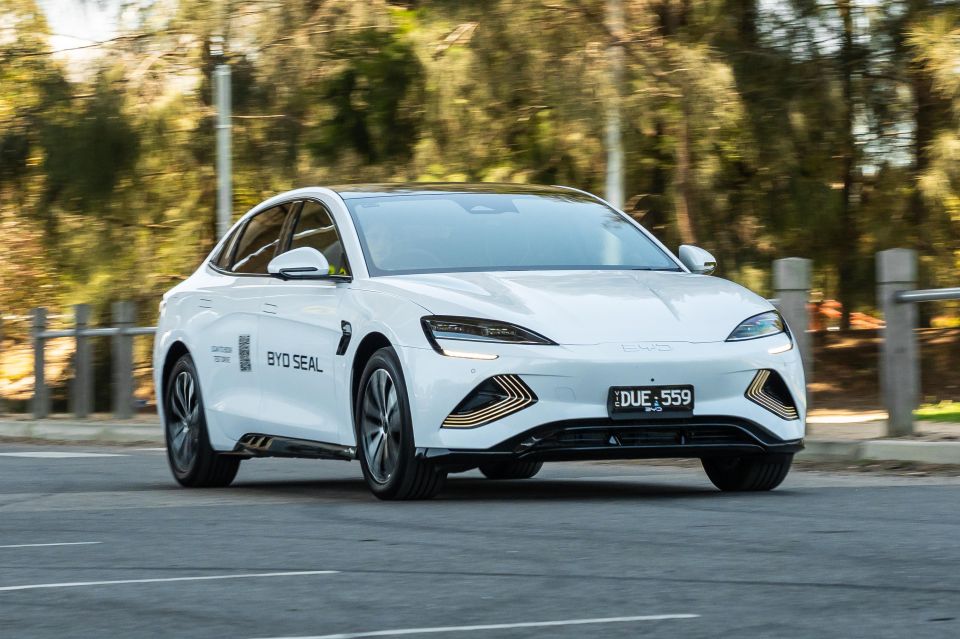
It can be a little confusing to drive at first because, despite the presence of a dedicated start/stop button, the car will turn on automatically when you hop in. Pressing the button will turn it off, so all that’s needed is to flick the gear selector to ‘Drive’.
Once you’re situated, you’ll find the car feels quite small from behind the wheel. It has a short-ish bonnet that slopes down aggressively, giving the impression you’re sitting on top of the front wheels and inspiring confidence in the car’s dimensions.
The steering itself is direct and predictable, offering a nicely weighted feel and good feedback. Turn the wheel and the Seal obediently follows, giving you good manoeuvrability and a tight enough turning circle to get out of sticky parking spots.
However, the ride isn’t quite as well-sorted as we’d like. It’s not unbearable, but there’s an unsettled quality about it – it bobbles over bumps with a lack of compliance – and while that isn’t a dealbreaker, it could do with a suspension tune more like the pleasant and inoffensive Camry’s.
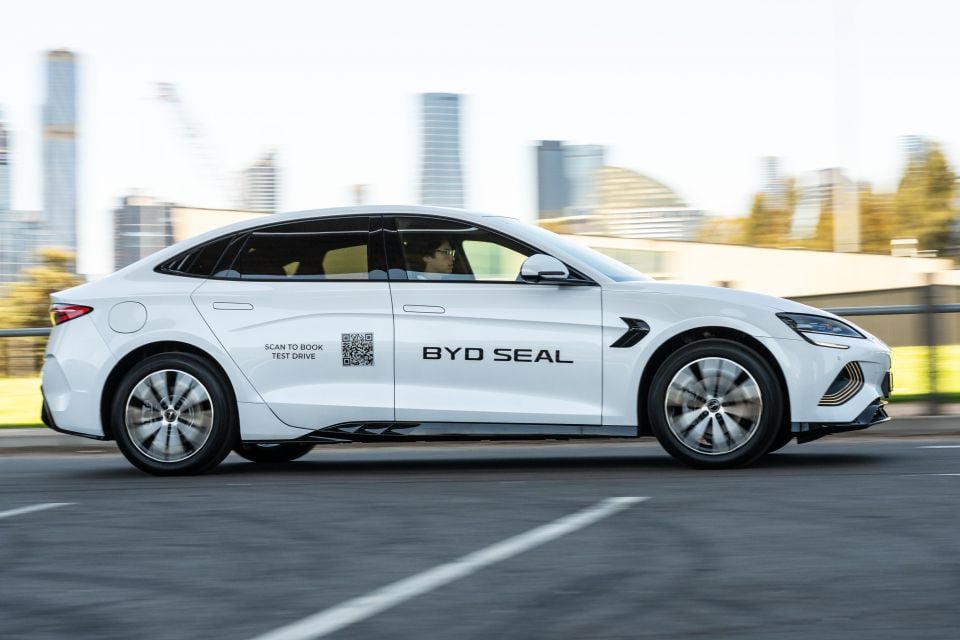
It’s clear BYD has gone for a stiffer setup with the Seal, contrasting the wallowy vibe of many of its compatriots. This would normally be fine, but some nuance that makes other firm-riding cars bearable is missing here.
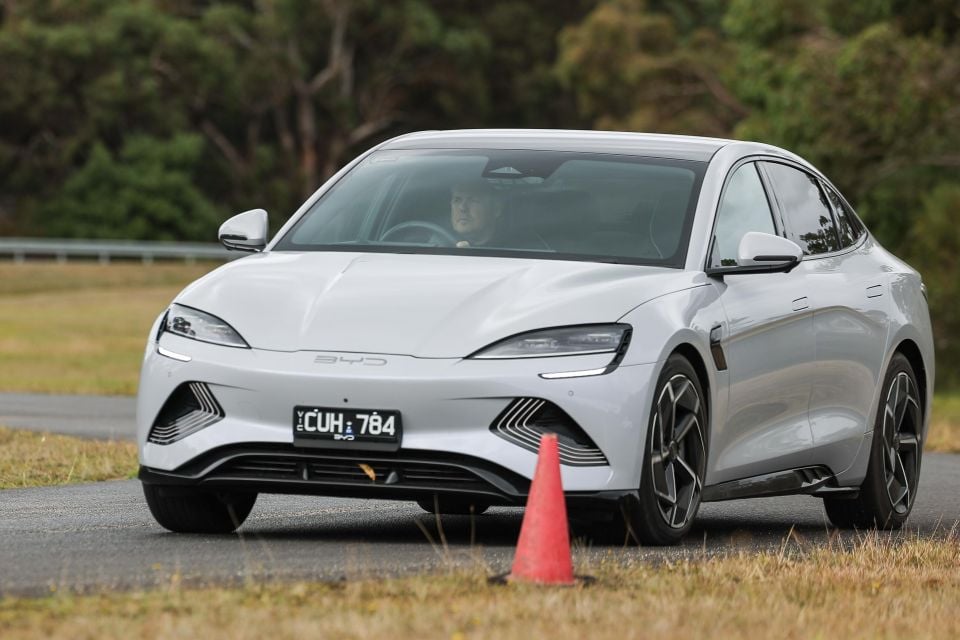
The upside of this suspension tune is unexpectedly sharp handling. The Seal has no issue carrying decent speed through turns, as it doesn’t feel like there’s a lack of mechanical grip or that you’re going to fall out of your seat by boatloads of body roll.
Instead, it’s quite enjoyable to drive once the speed picks up. The rear-drive configuration makes it dynamically interesting, like the Model 3, while dialling up to Sport mode brings a meaningful power bump and heavier, more controllable steering feel.
‘Controllable’ is a consistent theme for the Seal, particularly when it comes to its power delivery. We’d be genuinely surprised if anyone was able to get into trouble with the Dynamic’s modest power and torque figures, even if it is rear-driven.
Trusted Reviews, Smarter Choices, Better Prices
Where expert car reviews meet expert car buying – CarExpert gives you trusted advice, personalised service and real savings on your next new car.
It isn’t what you’d call fast, but it is rather zippy. The instant electric torque makes it feel spritely, and it’ll accelerate without hesitation, even if the subsequent speed ramp-up is quite gentle.
You’ll hardly ever notice the car breaking traction, though that doesn’t mean it’s impossible. Enabling Sport mode and planting your foot around a tight corner produces tyre squeal, but it’d be a stretch to call this car taily.
It’s all very predictable and often even enjoyable. That continues to the brake pedal, as while there’s no one-pedal driving mode (consistent with other BYD products), you get brake pedal feel that’s easy to manage – there’s no noticeable jump between regenerative and friction braking, making driving in traffic easier and more comfortable.
On top of all that, the Seal appears to be packaged quite well, with strong rearward visibility. Head checks are easy as a result, and while there’s a suite of safety gear on hand, you won’t want to rely on all of it.
The main culprit is the blind-spot monitoring system, which is too sensitive and can interfere with the car’s steering for no good reason. Additionally, the adaptive cruise control and lane-centring functions sometimes struggle to keep the car centred in its lane, and there’s a subtle audible speed limit warning always on by default.
What’s worse is how the lane-keeping and speed limit systems make themselves known. Put simply, they override any sounds produced by the car itself (excluding the radio, for instance), which means they mute the digital indicator when they pipe up.
This is off-putting, particularly when indicating a lane change, as it can be hard to tell whether the car is acting up or there’s genuine danger. Further, the car’s indicator stalk is one of those nonsensical ones that doesn’t click into place, which can be a learning curve in itself.
The Seal is generally a decent drive and also offers impressive noise suppression; it just needs a bit of chassis and tech finetuning to iron out some bugs.
To see how the BYD Seal stacks up against its rivals, use our comparison tool
What do you get?
There are three variants in the 2026 BYD Seal lineup for Australia, and the Dynamic is the cheapest.
2026 BYD Seal Dynamic equipment highlights:
- 18-inch alloy wheels
- Automatic high-beam
- Automatic LED headlights
- Rain-sensing wipers
- Heated and ventilated front seats
- Leatherette-wrapped steering wheel
- Leatherette upholstery
- 8-way power driver’s seat
- 6-way power passenger seat
- 4-way power-adjustable steering wheel
- 15.6-inch touchscreen infotainment system
- Wireless Apple CarPlay
- Wireless Android Auto
- Satellite navigation
- 10.25-inch digital instrument cluster
- 12-speaker 775W Dynaudio sound system
- DAB digital radio
- 1 x USB-C, USB-A outlet (front)
- 1 x USB-C, USB-A outlet (rear)
- Dual wireless phone chargers
- Keyless entry and start
- Ambient lighting
- Panoramic silver-plated glass roof
- Rear privacy glass
Seal Premium adds:
- 19-inch alloy wheels
- Long-range battery
- Leather-wrapped steering wheel
- Leather upholstery
- Driver’s seat memory
- 4-way lumbar adjustment
- Head-up display
- Side mirror auto-tilt and memory
Seal Performance AWD adds:
- Dual-motor AWD
- Frequency Selective Damping shock absorbers
- Heated steering wheel
To see how the BYD Seal stacks up against its rivals, use our comparison tool
Is the BYD Seal safe?
The BYD Seal boasts a five-star ANCAP safety rating, based on testing conducted by sister organisation Euro NCAP in 2023.
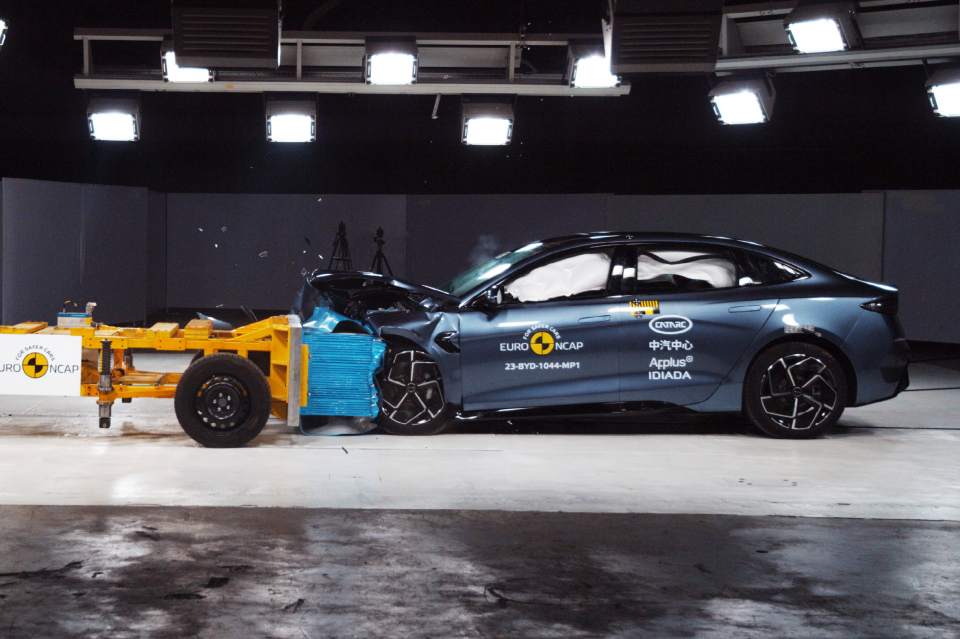
| Category | BYD Seal |
|---|---|
| Adult occupant protection | 89 per cent |
| Child occupant protection | 87 per cent |
| Vulnerable road user protection | 82 per cent |
| Safety assist | 75 per cent |
Standard safety equipment includes:
- 9 airbags, incl:
- Autonomous emergency braking
- Adaptive cruise control
- Blind-spot monitoring
- Emergency lane keep assist
- Front, rear cross-traffic assist
- Front and rear parking sensors
- Intelligent speed limit assist
- Lane departure warning
- Lane keep assist
- Rear cross-traffic assist
- Traffic sign recognition
- Rear occupant alert
- Safe exit warning
- Surround-view camera
To see how the BYD Seal stacks up against its rivals, use our comparison tool
How much does the BYD Seal cost to run?
The BYD Seal is backed by a six-year, 150,000km vehicle warranty and an eight-year, 160,000km high-voltage battery warranty. Servicing is required every 12 months or 20,000km, whichever comes first.
| Servicing and Warranty | BYD Seal |
|---|---|
| Vehicle warranty | 6 years, 150,000km |
| High-voltage battery warranty | 8 years, 160,000km |
| Roadside assistance | 12 months |
| Service intervals | 12 months or 20,000km |
| Capped-price servicing | 11 years |
| Average annual service cost | $380.8 |
| Total capped-price service cost | $4189 |
BYD’s service pricing, accurate as of December 8, 2025, is detailed below:
| Service | Price |
|---|---|
| 12 months, 20,000km | $165 |
| 24 months, 40,000km | $545 |
| 36 months, 60,000km | $165 |
| 48 months, 80,000km | $765 |
| 60 months, 100,000km | $165 |
| 72 months, 120,000km | $562 |
| 84 months, 140,000km | $165 |
| 96 months, 160,000km | $765 |
| 108 months, 180,000km | $165 |
| 120 months, 200,000km | $562 |
| 132 months, 220,000km | $165 |
For the sake of comparison, we’ll focus on the first five years of Seal maintenance. The first five services total $1805, or an average of $361 per year.
The Camry is covered by five years of capped-price servicing, with each service capped at $255. That works out to a total of $1275, which is less than the fully electric Seal that has fewer moving parts.
No comparison can be drawn with the Model 3, as Tesla doesn’t do traditional servicing schemes for its cars.
To see how the BYD Seal stacks up against its rivals, use our comparison tool
CarExpert’s Take on the BYD Seal Dynamic
We walked away from our week-long loan of the Seal Dynamic pleasantly surprised.
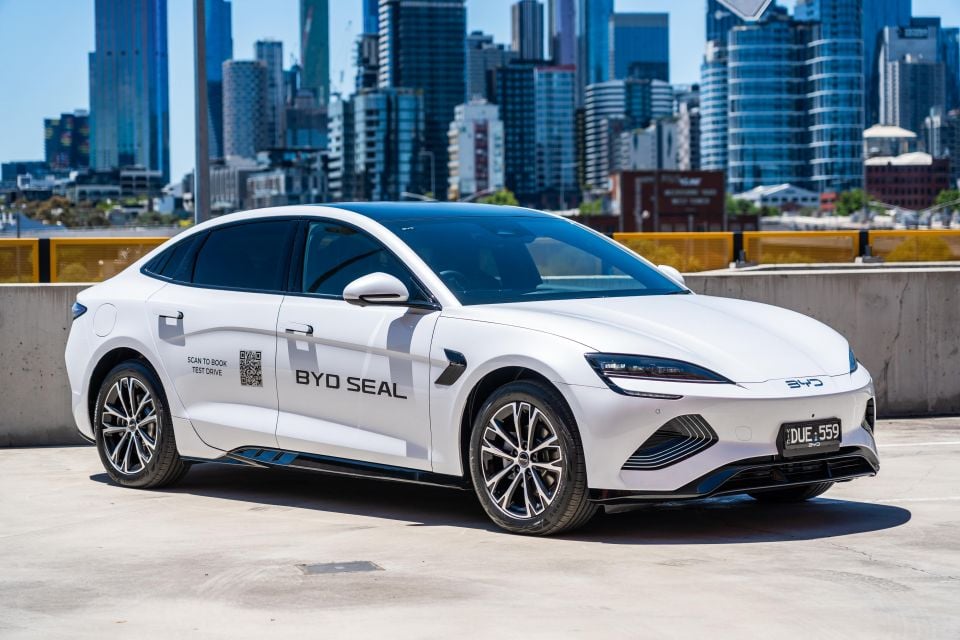
While the Model 3 is still the clear benchmark, the Seal is a very compelling alternative. This base Dynamic is much cheaper than the base Model 3 RWD, and you don’t really miss out on any of the gear that’s standard in the Tesla – quite the opposite.
Sure, BYD’s older-gen tech may not be as slick as Tesla’s, but even with its lack of buttons, the Seal feels vaguely more traditional than the Model 3. The screen in front of the steering wheel with speed readouts shouldn’t need to be praised, yet somehow the trend of minimalism has us doing exactly that.
This electric sedan offers an enjoyable ride, which isn’t ruined by the firm suspension setup and sometimes obnoxious safety gear. Again, some polish would go a long way, but the Seal is still well ahead of many of the Chinese cars that have launched more recently to much more critical reception.
If an affordable electric sedan is what you’re after, the base Seal Dynamic should be high on your shopping list.
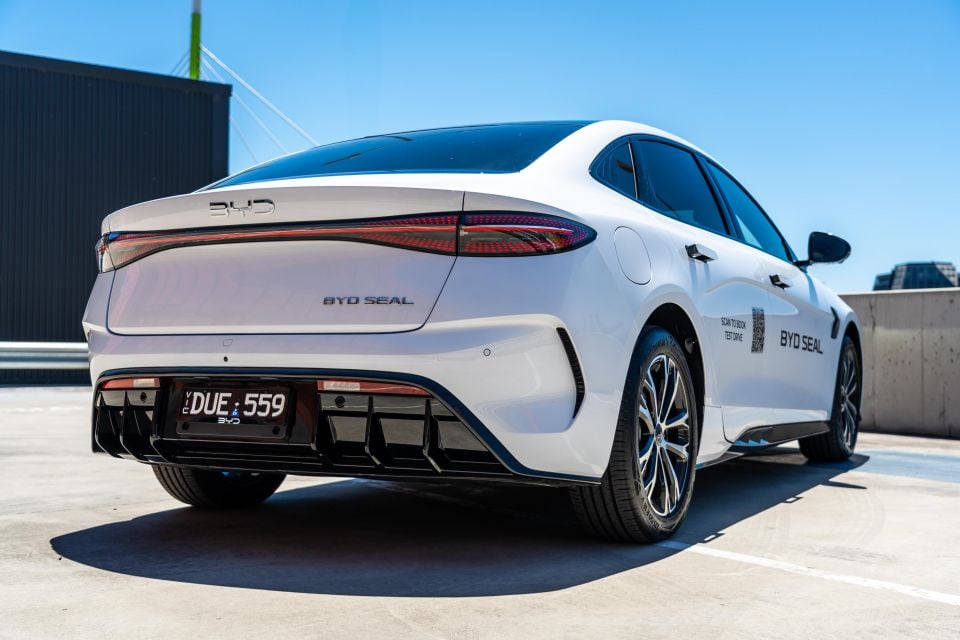
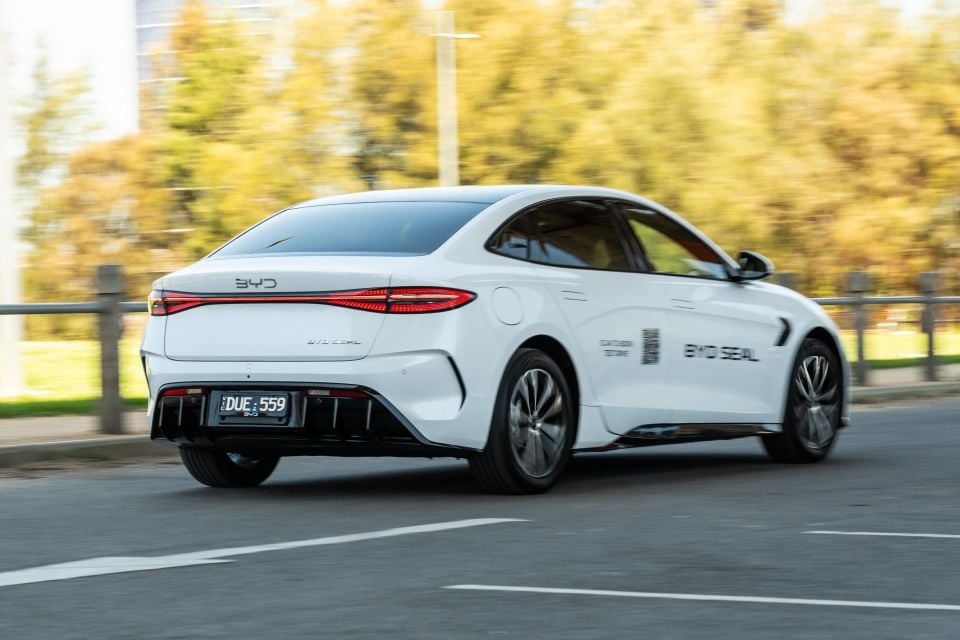
Note: Apologies for the BYD stickers in our imagery; our tester was sourced from a dealer and not BYD’s press fleet.
CarExpert can save you thousands on a new BYD Seal. Click here to get a great deal.
Click the images for the full gallery