
Cruisers have been around for a long time. The first examples (in the form that we know) were put on sale in the 1930s, and brands like Harley-Davidson, Indian, Henderson, and Excelsior were the protagonists. As time passed, things changed, and as with most things, the 1990s and 2000s got us a lot of variety in the cruiser segment, with some very appealing models.
That got us thinking; if one were to purchase a cruiser motorcycle from the ’90s, which ones would get the vote? They’d have to be decently powerful, although cruisers back then focused a lot more on torque rather than a high power figure. The cruiser market back then also differed from the market today in the sense that two-wheelers didn’t get iPhone-style annual updates that were marketed as a big change. With this in mind, we’ve made a list of ten powerful cruiser bikes from the 1990s that are worth buying today.

10 Small Cruiser Bikes To Kickstart Your 2025 Riding Goals
The most powerful beginner-friendly cruiser bike on this list produces over 90 horsepower but is still very approachable.
10
Harley-Davidson FXDB 50th Anniversary Sturgis
Power: 52.8 HP

|
Engine |
Max Power |
Max Torque |
Years of Manufacture |
|---|---|---|---|
|
1,337 cc 45-degree v-twin, 2 valves per cylinder, OHV, air cooling |
52.8 HP @ 5,000 RPM |
61.7 LB-FT @ 3,000 RPM |
1991 |
The FXDB 50th anniversary Sturgis was an important model for Harley-Davidson, having revived the Sturgis name after a while thanks to its close ties with the famous motorcycle rally. This was a chopper-from-the-factory style of motorcycle, and it needed the poke to back up the iconic name. That is why it got one of the large displacement engines from the lineup. For context, the engine never ever makes less than 55 pound-feet; that’s the minimum you get all the way from idle to the limiter. At 3,500 RPM, it made more torque and power than a Kawasaki Ninja ZX-11 – the fastest production motorcycle in the world at the time – at the same speed.
9
Harley CVO FXR3
Power: 60 HP

|
Engine |
Max Power |
Max Torque |
Years of Manufacture |
|---|---|---|---|
|
1,340 cc 45-degree v-twin, 2 valves per cylinder, OHV, air cooling |
60 HP @ NA RPM |
75 LB-FT @ NA RPM |
1999 |
Here’s a fun fact: the FXR2 and FXR3 never got a ‘CVO’ badge, even though they were the first two CVO models from Harley-Davidson. Only 900 FXR3s were built, with an Evolution Twin engine in a standard chassis. They also got a flame paint job, unique 19-inch ThunderStar wheels, a saddle exclusive to it, and so much chrome, you needed sunglasses to look at it in the dark. The accessories list alone added $4,000 to the FXR3’s price, and each example was assembled by two-man teams in a building set aside for just the assembly of the CVO motorcycles. The popularity of the FXR3 is why we have CVOs today, and since there were so few produced, they are eminently collectible.
8
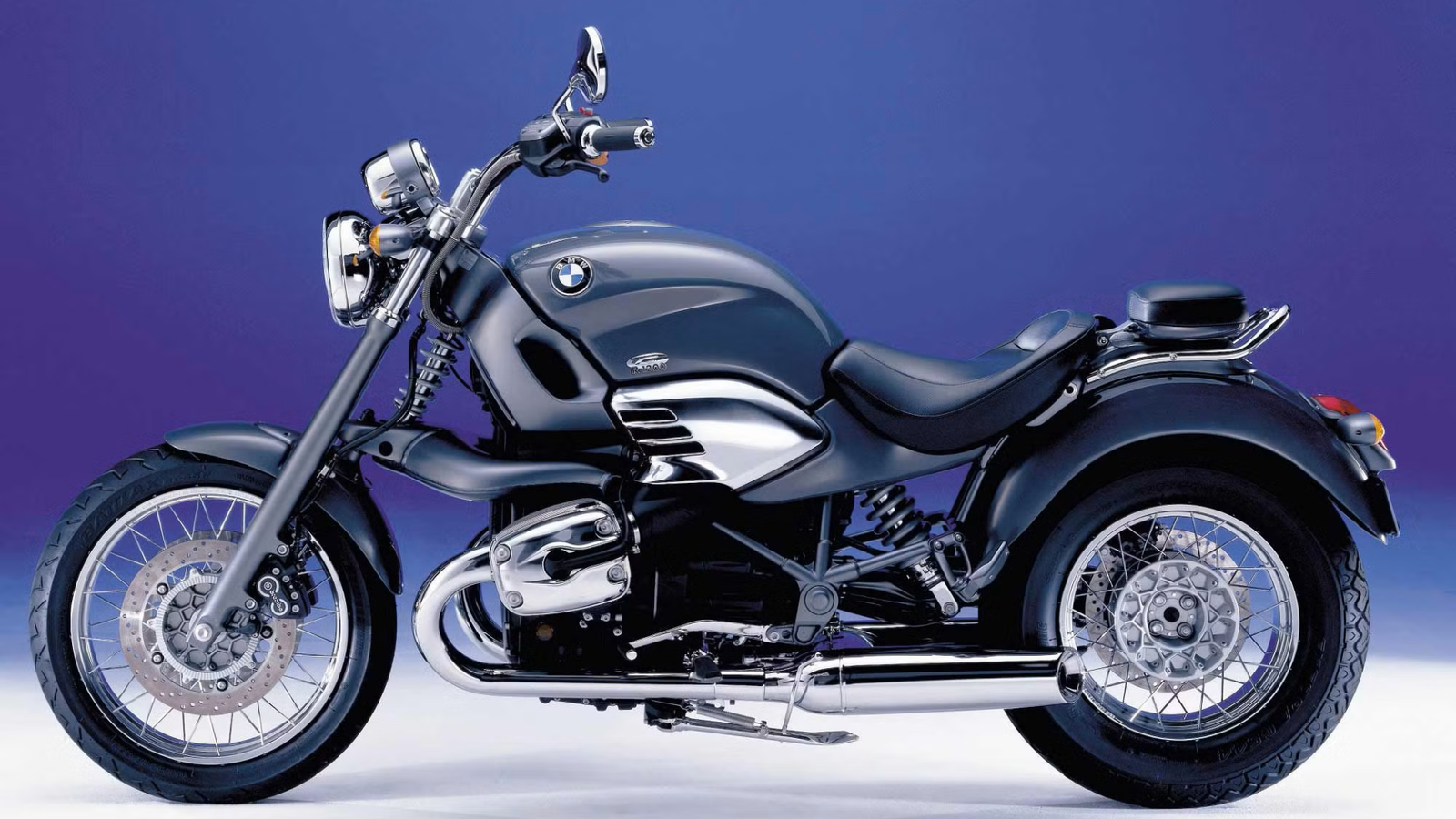
BMW R 1200 C
Power: 61 HP

|
Engine |
Max Power |
Max Torque |
Years of Manufacture |
|---|---|---|---|
|
1,170 cc Horizontally opposed boxer twin, four valves per cylinder, air/oil cooling |
61 HP @ 5,000 RPM |
72.3 LB-FT @ 3,000 RPM |
1997-2004 |
The R 12 cruiser that is currently on sale debuted only a little over a year ago. But back at the tail end of the ‘90s, the Bavarian manufacturer had another cruiser with the same formula. It was called the R 1200 C, and you might have noticed it in the Bond film Tomorrow Never Dies. An all-new frame was designed for it, but it retained some BMW staples like the Telelever front fork. It had some other unique features as well, like the passenger seat that could fold up and become the rider backrest, with the ability to be locked into three different angles while on the move.

Here Are The Most Powerful Cruiser Bikes From All Popular Brands
The most powerful cruiser bike here packs the biggest production engine ever on a motorcycle.
7
Harley-Davidson FLSTF Fat Boy
Power: 67 HP

|
Engine |
Max Power |
Max Torque |
Years of Manufacture |
|---|---|---|---|
|
1,337 45-degree v-twin, two valves per cylinder, OHV, air-cooled |
67 HP @ 6,000 RPM |
71.5 LB-FT @ 2,350 RPM |
1990 onward |
Speak of a 1990s cruiser and the Fat Boy will come up. A whole generation has grown up watching the truck/motorcycle chase sequence in Terminator 2 in which the Fat Boy was arguably the star, despite Arnie riding it. The Fat Boy was one of the first custom-type cruisers to come from the factory and was a design icon with its disc wheels, acres of chrome, hardtail-like rear, and chopper-style front forks. It was a sprightly performer too, which made its popularity soar. You can still find it on sale today but the OG is the OG.
6
Harley-Davidson FXST Deuce
Power: 67 HP

|
Engine |
Max Power |
Max Torque |
Years of Manufacture |
|---|---|---|---|
|
1,449 cc Twin Cam 88 45-degree v-twin, two valves per cylinder, OHV, air-cooled |
67 HP @ 5,200 RPM |
86 LB-FT @ 3,500 RPM |
1999 – 2001 |
Look carefully at the Deuce, and you’ll notice that it has quite a few design elements that are similar to the Fat Boy. That is because both of them belong to the Softail family. The Deuce has a slightly larger engine, though, and its power comes in at lower revs. The torque figure is correspondingly higher, too. It also has forks that are more kicked out, and a large chopper-esque 21-inch spoke front rim. The rear wheel is a more modern 17-inch rim as well. It might not make it to a list of the most popular Harleys, but if you prefer the chopper life, the Deuce will be a better pick between it and the Fat Boy.
5
Triumph Thunderbird 900
Power: 70 HP

|
Engine |
Max Power |
Max Torque |
Years of Manufacture |
|---|---|---|---|
|
885 cc Inline three-cylinder, four valves per cylinder, DOHC, liquid-cooled |
70 HP @ 8,000 RPM |
53 LB-FT @ 4,800 RPM |
1995 – 2004 |
The Thunderbird name has a lot of history, having been sold in the USA from the 1950s. Back then, it was a parallel twin-powered cruiser, as it was before it was discontinued in 2019. However, in the mid-‘90s, the Thunderbird was relaunched with an inline triple, which was designed to look air-cooled but wasn’t. It was called the Thunderbird 900 and looked a lot like today’s Bonneville does, but was very much a cruiser. A sporty one whose engine made its power at relatively high revs compared to the competition. It was happy to hustle around bends.

10 Old Cruiser Bikes That Still Slap Harder Than New Bikes
Modern cruisers may be more refined, but these classics are what made the segment truly iconic, raw, and undeniably cool.
4
Victory V92C
Power: 71 HP

|
Engine |
Max Power |
Max Torque |
Years of Manufacture |
|---|---|---|---|
|
1,510 cc 50-degree v-twin, four valves per cylinder, SOHC, air-cooled |
71 HP @ 5,000 RPM |
87 LB-FT @ 3,300 RPM |
1999 – 2003 |
This isn’t one of the more well-known cruisers of the ‘90s, but it is important in its own right. This was one of the first products that Victory launched under the ownership of Polaris, and it sparked a race for larger engines that culminated with the likes of the Kawasaki Vulcan VN 2000. When the V92C launched, it was the second-largest production motorcycle engine, and when the updated version of the Freedom Motor was launched, it made as much power and torque as a Stage I Deuce.
The gearbox was updated to a six-speed one, and the brakes were top-shelf Brembo units. The company was also careful to design the engine to be capable of more power should the owner want it, so these figures are just a baseline for owners. With the closing of the brand, you might not be able to source parts as easily as a Harley or an Indian, but this is definitely one of the most desirable and powerful cruisers of the ‘90s.
3
Honda VF750C Magna
Power: 87 HP

|
Engine |
Max Power |
Max Torque |
Years of Manufacture |
|---|---|---|---|
|
748 cc 90-degree V4, four valves per cylinder, DOHC, liquid-cooled |
87 HP @ 9,000 RPM |
51.3 LB-FT @ 7,250 RPM |
1994 – 2003 |
The Magna is the spiritual sibling of the Yamaha V-Max: it runs a similar 90-degree short-stroke V4 engine with liquid cooling. Shaft final drive was unique among cruisers that overwhelmingly preferred a belt. This isn’t the V65 Magna with the much larger engine, as this one had an engine based on the VFR’s powerplant, re-tuned for more torque. One of the unique design elements of a Magna is the set of quad exhausts, two to a side. This was one of the cruisers that truly loved canyon roads, but it was flawed at the core. The gearing wasn’t right for either the city or the highway, the engine wasn’t happy unless it was screaming to the redline, and the seating position wasn’t the best for long rides. Still, it is a rare thing and definitely among the most powerful cruisers of the era.
2
Honda Gold Wing Valkyrie GL1500
Power: 100 HP

|
Engine |
Max Power |
Max Torque |
Years of Manufacture |
|---|---|---|---|
|
1,520 cc Boxer six-cylinder, two valves per cylinder, SOHC, liquid-cooled |
100 HP @ 6,000 RPM |
95.9 LB-FT @ 5,000 RPM |
1997 – 2003 |
Today, the Gold Wing is available either as a bagger or a full-dress tourer. But in the 1990s, it was also available as a cruiser called the Valkyrie, powered by the same boxer six engine and made an enormous 100 horsepower. This is probably the best-put-together cruiser on this entire list, and the engine will take you around the world a few times before needing a major overhaul. Fun fact: if you manage to get a JDM Valkyrie from the ‘90s, it will be equipped with the reverse gear. The US market didn’t get it, though.

10 Cruiser Bikes With The Longest Riding Range
The cruiser motorcycle with the longest-riding range today barely packs 20 horses but has an insane fuel efficiency of over 80 MPG!
1
Yamaha V-Max
Power: 145 HP

|
Engine |
Max Power |
Max Torque |
Years of Manufacture |
|---|---|---|---|
|
1,198 cc 70-degree V4, four valves per cylinder, DOHC, liquid-cooled |
145 HP @ 9,000 RPM |
89.6 LB-FT @ 7,500 RPM |
1985 – 2005 |
Finally, the power king of cruisers in the ‘90s was the Yamaha V-Max. It was a muscle bike whose engine was so good, it needed minimal changes to keep it going for twenty years! It had unheard-of tech like the ‘V-Boost’ which opened a second set of electronically controlled butterfly valves in the intake manifold from 5,750 RPM onward. This gave it a 10 percent boost in peak power. Not that it needed it – it already made 45 percent more power than the next most powerful option! Despite being a cruiser, its main purpose was to embarrass all competitors at the drag strip, and it achieved this, making it a legend.