
German cars have always occupied a unique space in the automotive world — offering engineering precision, everyday usability, and a deep-rooted focus on driving feel and overall quality. As we head into 2026, that formula is evolving rather than disappearing, and that’s brilliant if you ask me. Electrification is accelerating, which is a bore for petrolheads like me; hybrid performance is becoming mainstream, though that tickles my fancy a smidgen; and even long-standing icons are being reimagined for a new era.
Yet despite tighter regulations and shifting buyer priorities, German manufacturers continue to deliver vehicles that feel thoughtfully engineered, purpose-driven, and genuinely desirable. And what better way to start the year than with 10 German cars worth buying in 2026, spanning from hot hatches, luxury sedans, performance icons, electric newcomers, and even character-filled outliers. Some stay true to tradition, others embrace the future head-on — but all of them reflect why German cars still command respect in a rapidly changing automotive landscape.
Volkswagen Golf 8 GTI
The Everyday Performance Benchmark

The Volkswagen Golf 8 GTI remains one of the most complete everyday performance cars you can buy. Under the hood sits a 2.0-liter turbocharged four-cylinder producing 241 horsepower and 273 pound-feet of torque, paired with a seven-speed dual-clutch automatic. Its performance is the cherry on top, but it’s the GTI’s dynamic handling and well-sorted chassis that truly make it one of the most desirable hot hatches on sale. Volkswagen has essentially nailed the formula with the Golf 8 GTI. It may not be the most emotionally raw GTI in the lineage, but it is easily the most powerful and accomplished — and in my opinion, that counts for a lot.
The GTI establishes the baseline with all the performance and characteristics befitting of a far more expensive and well-oiled sports car, with snappy and grippy handling, quick straightline performance, and sophisticated composure.
– Chris Chin for TopSpeed

On paper, the GTI isn’t trying to overwhelm you. A low six-second 0–60 mph time is quick, but it’s not the headline. Where GTI really shines is in how it goes about its business. It feels light and alert, the steering talks back, and when you lean on it through a series of corners, it stays composed and genuinely entertaining — even in a track environment. Inside, it strikes the balance you’d expect: practical, well laid out, and solidly built. The sports seats are supportive, the technology is modern, and while the touch-heavy controls won’t be to everyone’s taste, the cabin is comfortable and easy to live with day to day. Sitting around the $35,590 mark, it still undercuts rivals like the Honda Civic Type R and Hyundai Elantra N.
Notable Features And Specs
- Still one of the few hot hatches that feels just as happy commuting as it does being driven hard.
- Chassis balance is the star here — approachable, predictable, and confidence-inspiring.
- It doesn’t chase extremes, which is exactly why it works so well as an everyday performance car.


Find 2026 Volkswagen Golf GTI and more cars for sale on our Marketplace
BMW 3 Series (330i / M340i)
Still The Segment’s All-Rounder

Few cars do “everything well” like the BMW 3 Series. A 2.0-liter turbocharged four-cylinder producing 255 horsepower powers the 330i, while the M340i steps up to a 3.0-liter turbocharged inline-six with 382 horsepower, both paired to an excellent eight-speed automatic. I’ll admit I’m a sucker for BMW’s B58 engine — it’s smooth, potent, and effortlessly quick, the kind of motor that leaves you smiling long after you’ve parked. The 330i feels smooth and efficient in everyday driving and never feels underpowered, while the M340i turns things up significantly, delivering sub-four-second 0–60 mph performance without losing its composure.

Inside, the 3 Series strikes a strong balance between modern tech and traditional BMW ergonomics, with quality materials and a layout that feels premium without trying too hard. With the 330i sitting around the $48,000 mark and the M340i moving into the $60,000 range, it lands right where you’d expect — competitive for the segment, and still one of the better blends of comfort and driver involvement available.
Notable Features And Specs
- The kind of car that never feels out of place, whether you’re cruising or pressing on.
- The B58-powered M340i brings effortless speed without turning the car into a handful.
- Still one of the best benchmarks for ride comfort and driver involvement combined.
Find 2026 BMW 3 Series Sedan and more cars for sale on our Marketplace
Mercedes-Benz C-Class
Luxury-First, Daily-Friendly

The current C-Class leans heavily into being a proper luxury saloon. I do applaud the 2.0-liter turbocharged four-cylinder; it has enough power, precisely 255 horsepower, supported by a mild-hybrid system. Inside, the cabin feels well-built and exudes a sense of classiness. A large central touchscreen dominates the dashboard, paired with high-quality materials and ambient lighting that give the C-Class a bit of an edge. It’s tech-heavy, but thoughtfully executed, and easy to settle into daily.

On the road, the latest C-Class prioritizes refinement over outright sportiness. It’s quiet, composed, and comfortable — ideal for buyers who value sophistication more than aggressive handling. Talking numbers, you can pick one up at $49,600 for the C 300, with higher trims pushing into the low-$60,000 range, placing it squarely among the most polished and user-friendly compact luxury sedans you can buy in 2026.
Notable Features And Specs
- Clearly aimed at buyers who prioritize comfort and cabin experience over sharp handling.
- The interior presentation punches above its class, especially at night.
- Easy to live with day to day, even if it’s no longer the sportiest option in the segment.
Find 2026 Mercedes-Benz C-Class Sedan and more cars for sale on our Marketplace

The Best New 4-Door Sports Cars In 2025
Some of these are proper sports cars, the size of your grandpa’s Buick Le Saber.
Audi A4 / Audi S4
The Sensible Middle Ground

The Audi A4 and S4 continue to occupy the sensitive middle ground in the segment. The A4 harbors a 2.0-liter turbocharged four-cylinder producing 261 horsepower, while the S4 upgrades to a 3.0-liter turbocharged V6 with 349 horsepower, both paired with Audi’s Quattro all-wheel-drive system for confident, all-weather traction. The interior quality is classic Audi, with clean design, excellent materials, and intuitive ergonomics. The cabin doesn’t shout for attention, but everything feels thoughtfully laid out, making it an easy place to spend time every day.

On the road, the 2025 A4 is stable, composed, and comfortable, while the S4, from what I can imagine, adds genuine pace and grip without sacrificing usability. You can pick up the A4 for $41,000, with the S4 beginning in the mid-$50,000 range, positioning both as compelling alternatives to rivals from BMW and Mercedes-Benz. It may not be the flashiest option in the class, but it remains one of the most complete and dependable German sedans you can buy.
Notable Features And Specs
- Feels solid and well engineered in a way that’s hard to quantify but easy to appreciate.
- Quattro all-wheel drive adds confidence without dulling everyday usability.
- Not the flashiest choice, but a very safe one for long-term ownership.
Find 2025 Audi A4 Sedan and more cars for sale on our Marketplace
Porsche 911
Expensive, But Still The Gold Standard

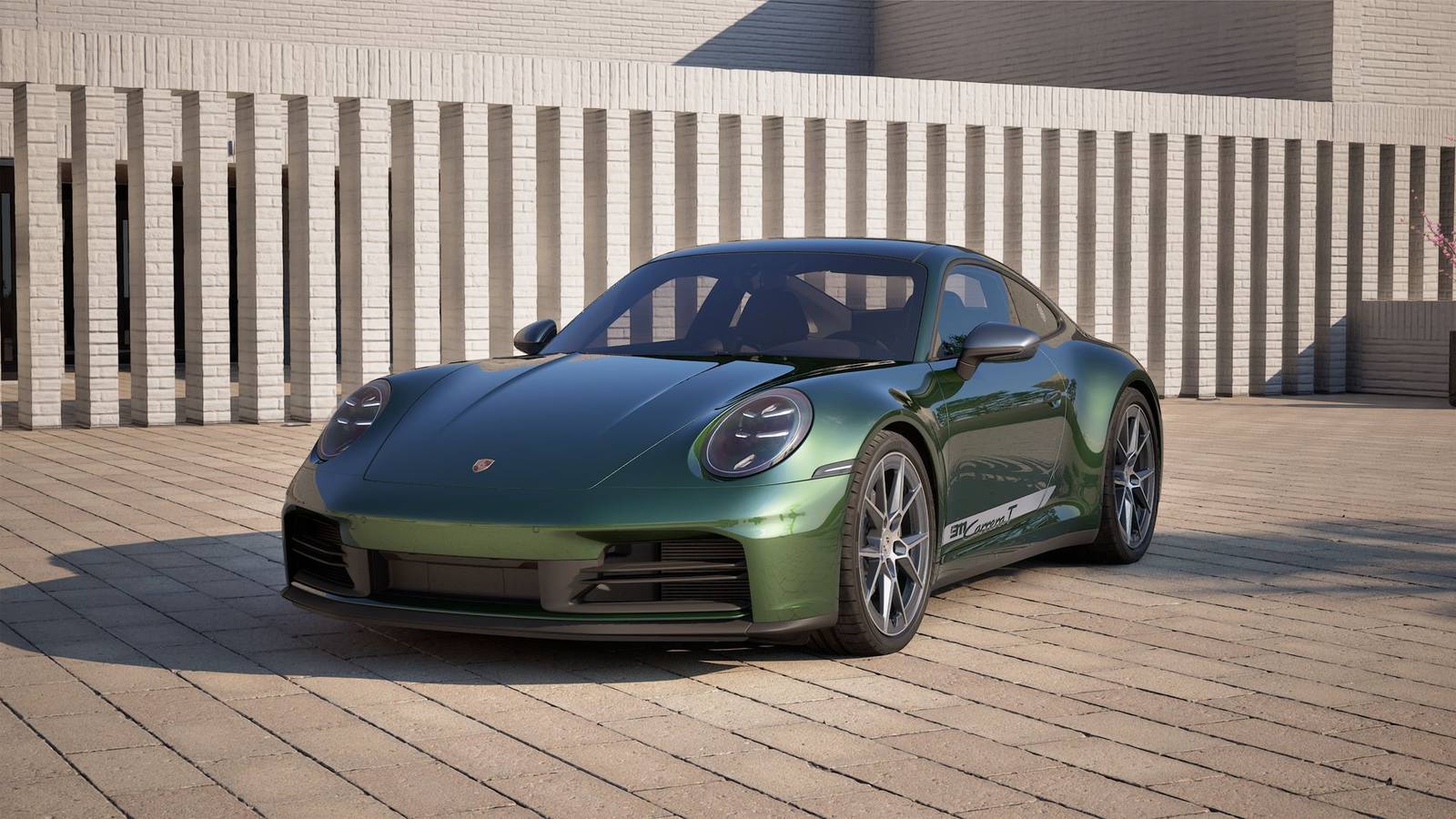
Yes, it’s expensive — but the Porsche 911 continues to justify its reputation. The base Carrera is powered by a 3.0-liter twin-turbo flat-six producing 379 horsepower, while higher trims push well beyond the 400-horsepower mark, delivering serious performance across the range. Inside, the 911 offers modern flair with traditional Porsche ergonomics. Basically, everything is exactly where you expect it to be, reinforcing the car’s sense of precision.

On the road, the 911 surpasses its rivals in combining performance, usability, and feedback. It’s fast, confidence-inspiring, and deeply engaging whether you’re commuting or carving along a mountain road. Pricing in the U.S. starts around $135,000 for the base Carrera, with higher trims quickly climbing well beyond that, but in 2026, it remains one of the few sports cars that genuinely does it all—and justifies the cost. I’d definitely take the plunge.
Notable Features And Specs
- One of the few sports cars that doesn’t ask you to compromise daily usability.
- Delivers feedback and confidence in a way few rivals can match.
- Expensive, yes — but still feels engineered with intent rather than excess.
BMW i4
The EV That Feels Familiar

The BMW i4 proves that going electric doesn’t have to mean sacrificing familiarity. Power ranges from 335 horsepower in the eDrive40 to 536 horsepower in the M50, with a driving range of up to 301 miles depending on configuration. Inside, the i4 presents itself as a modern BMW first and an EV second. The cabin is comfortable, well-built, and intuitive, avoiding the overly futuristic gimmicks seen in some rival electric vehicles. From layout to materials, it closely mirrors BMW’s current design language.
The beauty of how the eDrive40 exhibits its performance, however, is how well-balanced and optimized it all is. Acceleration is swift, but never brutal. It’s enough to get you up to speed quickly, and more than plenty to overtake thanks to the electric motor’s instantaneous thrust.
– William Clavey for TopSpeed

Based on its specifications and independent testing, the BMW i4 promises strong acceleration, impressive refinement, and confident handling thanks to its low center of gravity. With pricing positioned in the low-$50,000 range and higher-performance variants pushing toward the mid-$60,000s, the i4 sits competitively within the premium EV space, offering a familiar and well-rounded entry point for buyers considering the move to electric.
Notable Features And Specs
- Feels like a BMW first, which will matter to buyers new to EVs.
- Strong performance without leaning too hard on gimmicks or theatrics.
- Makes the transition to electricity feel far less intimidating than many rivals.

10 Used German Luxury Cars That Offer Sports Car-Level Performance
These ten used German luxury cars offer a fantastic combination of high-end comfort and sports car-like performance.
Audi RS3
Small, Loud, And Gloriously Unnecessary

The Audi RS3 exists purely because engineers wanted it to. Its 2.5-liter turbocharged five-cylinder produces 401 horsepower, delivering one of the most distinctive soundtracks on sale today. A baby R8? Yes — absolutely. This pocket rocket delivers explosive performance, hitting 0–60 mph in around 3.6 seconds thanks to standard all-wheel drive.
The beauty of how the eDrive40 exhibits its performance, however, is how well-balanced and optimized it all is. Acceleration is swift, but never brutal. It’s enough to get you up to speed quickly, and more than plenty to overtake thanks to the electric motor’s instantaneous thrust.
– William Clavey for TopSpeed

The interior has luxury and sporty flair, with striking seats, bold trim, and high-quality materials throughout. On the road, the RS3 is loud, fast, and unapologetically fun. It’s not subtle, but that’s precisely the point. Sitting in the mid-$60,000 range in the U.S., it isn’t cheap, but in a world of increasingly sanitized performance cars, the RS3 remains gloriously unfiltered — and that alone makes it special.
Notable Features And Specs
- Built with little regard for subtlety — and that’s part of the appeal.
- The five-cylinder engine gives it a character most modern cars lack.
- Feels unapologetically fun in a segment that’s becoming increasingly sensible.
Mercedes-Benz AMG C63
Performance In The Hybrid Era

The latest AMG C-63 S E Performance is controversial, and understandably so. The V8 is gone, replaced by a turbocharged four-cylinder hybrid system producing up to 671 horsepower — a staggering figure on paper and a clear signal of where AMG is heading. Inside, the cabin is modern, luxurious, and unapologetically tech-heavy, with AMG-specific displays and aggressive design cues that remind you this is no ordinary C-Class.

From behind the wheel, the performance is undeniably strong and immediate, but the experience feels more digital than emotional, prioritizing speed and capability over old-school character. Positioned well into the $80,000-plus bracket in the U.S., the hybrid C63 won’t win over purists mourning the loss of the V8. Still, in 2026, it stands as a compelling — if divisive — example of how German performance sedans are evolving, and a fascinating glimpse into AMG’s future.
Notable Features And Specs
- Immensely fast, but clearly designed around technology rather than emotion.
- Hybrid performance delivers instant punch, even if the character divides opinion.
- A glimpse into AMG’s future, whether enthusiasts like it or not.
Porsche Macan
The Driver’s SUV

The Porsche Macan continues to set the benchmark for driving dynamics in the compact SUV segment. Powertrains range from turbocharged four-cylinders through to a 434-horsepower V6 in the GTS, offering strong performance across the lineup. Inside, the Macan feels unmistakably Porsche, with high-quality materials, an excellent driving position, and a clean, purposeful design.

Based on its long-standing reputation and independent testing, the Macan is known for handling more like a sports sedan than an SUV, with sharp steering and impressive body control. Positioned in the mid-$60,000 range in the U.S. and climbing well into six figures when optioned, the 2025 Macan isn’t inexpensive. Even as it evolves toward electrification, it remains one of the most engaging compact luxury SUVs available.
Notable Features And Specs
- Long regarded as the SUV for people who still enjoy driving.
- Focuses on chassis tuning rather than headline figures.
- Continues to blur the line between crossover and sports sedan.

10 Practical Cars That Are Secret Sports Car Killers
Sports cars advertise their performance, but some cars are more covert about their unfettered power
Volkswagen ID. Buzz
Retro Personality Meets The EV Future

The ID. Buzz isn’t practical for everyone — but it’s impossible to ignore. Powered by an electric drivetrain producing 282 horsepower, it offers modern EV performance wrapped in an unmistakable retro design that immediately sets it apart from anything else on the road. Inside, the cabin is spacious, airy, and highly versatile, with flexible seating and family-friendly features designed around usability rather than outright performance. Based on early impressions and independent reviews, it prioritizes smoothness and refinement over speed, leaning into comfort and character instead.
The entire ID. Buzz cabin’s vibe is about space and functionality. There’s just storage everywhere, with little pockets and cubbies all over the place, as well as more connectivity options than you’ll really ever need.
– William Clavey for TopSpeed

Positioned in the mid-$60,000 range in the U.S., depending on configuration, the ID. Buzz represents something rare in today’s market: a vehicle with genuine personality. In 2026, that counts for a lot. German manufacturers continue to offer something for almost every buyer in 2026 — whether you value driving engagement, comfort, performance, or future-proof technology. While the industry is evolving rapidly, these cars show that thoughtful engineering and clear intent still matter. And when done right, they remain very hard to beat.
Notable Features And Specs
- Style and personality do most of the heavy lifting here.
- Designed around space and comfort rather than outright performance.
- Proof that EVs don’t have to be anonymous or sterile.
Sources: Manufacturer reports