
Cruise control, heated seats, aluminum bodies on sports cars, gears that shift in the blink of an eye. These are just some examples of things we take for granted today. Once upon a time, these features were groundbreaking innovations, pushing the boundaries of tech. But where did these advancements come from?
Every innovation has an origin story, a eureka moment where an idea took shape and changed the automotive landscape forever. We’ve taken a trip through automotive history to share ten cars that were ahead of their time, showcasing the pioneering spirit of their creators and the lasting impact they had on the cars we drive today.

10 Timeless Sedans You Can Still Get Excited About
While the world rushes toward crossovers and EVs, the classic sedan still holds a special place in the hearts of car enthusiasts.
10
1970 Range Rover Classic
The Original Luxury SUV

Before the Range Rover, SUVs were rugged vehicles designed for nothing but off-road functionality, with little or no consideration for on-road comfort. But, the Range Rover Classic changed everything; birthing the luxury SUV segment. Its innovative design and new purpose demonstrated what an SUV could be, paving the way for luxurious and capable SUVs we see today.
But it wasn’t just about comfort. The Classic boasted a permanent four-wheel drive system to ensure grip on and off-road. It also featured coil-sprung suspension to deliver a comfortable ride on paved surfaces—a contrast to the leaf-sprung suspensions common in SUVs of the time.
It proved that SUVs could be refined, broadening their appeal beyond the farm and trail and attracting a new audience. Additionally, given that it was an SUV, the Range Rover boasted better space and a more elevated driving position than anything else in the luxury segment.
9
1981 DeLorean DMC-12
A Stainless Steel Visionary

Forever immortalized by “Back to the Future”, the DeLorean DMC-12 was a car that did one thing: stand out from the crowd. Commercially, the DMC-12 failed but its unique design is still something to pay attention to; even today. This DeLorean was an instant head turner, with its iconic stainless steel body, gullwing doors, and rear-mounted engine.
Sure, it was incredibly slow, but the DMC-12’s stainless steel body was revolutionary as it was resistant to rust and corrosion, a durable alternative to painted cars of its era. The gullwing doors, while undeniably cool, also presented practical advantages in tight parking spaces. And while the rear-mounted Peugeot-Renault-Volvo (PRV) V6 engine wasn’t particularly powerful, but it did help with the car’s balanced weight distribution.
8
2002 Volkswagen Phaeton
The Understated Overachiever

Ferdinand Piëch, Volkswagen Group’s chairman at the time, once envisioned a Volkswagen that could challenge the established luxury titans, Mercedes and BMW. The result was the Phaeton, a technologically advanced luxury sedan that defied the expectations you’d typically have when glancing at a VW badge, as the Phaeton carried a price tag of almost $70,000.
One of Piëch’s goals was to make sure the car could maintain a speed of 186 mph for hours on end, in 122-degree heat, while maintaining a cabin temperature of 71.6 degrees. This extraordinary goal, along with the other nine undisclosed others, reportedly led many engineers to abandon the project, deeming it insurmountable.
Yet, the Phaeton emerged as a technological marvel. Its advanced climate control system, featuring a dehumidifier to prevent window fogging, was just one example of its high-tech features. Under the hood, the Phaeton offered a range of powerful engines, including a W12, capable of propelling the car to speeds exceeding 200 mph (322 km/h) when unrestricted.

When Innovation Defied Convention: Ten Cars That Broke The Mold
These cars had a mixed effect on the automobile world, but all of them brought something to the table that was revolutionary, whether big or small.
7
1992 McLaren F1
The Undisputed Hypercar King

How can any discussion of automotive innovation omit McLaren’s best-known machine, the F1? So influential was the F1 that its designer, Gordon Murray, created a spiritual successor decades later in the GMA T.50.
But how exactly was the F1 ahead of its time? The attention to detail is clear in every aspect of the car; ranging from the Formula One-inspired carbon fiber monocoque to the car’s central driving position. The engine bay was also lined with gold, all to cope with the heat. The 240-mph speed record held by the F1 would go on to be unbeaten until 2005, when Bugatti’s Veyron hit 267.8mph.
6
2014 BMW i8
A Plug-In Hybrid Pioneer

The Bentley Continental, Mercedes-AMG C63, and Porsche 911 all have something in common as these performance icons have all recently embraced electrification, but it was the BMW i8 that boldly pioneered the concept of a plug-in hybrid sports car back in 2014. With its dramatic butterfly doors, striking multicolor scheme, and low-slung silhouette, the i8 was a head-turner that looked fast. But beneath this flamboyant exterior lay a surprisingly unconventional powertrain. A turbocharged 1.5-liter three-cylinder engine, straight from a Mini… But it was paired with an electric motor, delivering a total of 357 horsepower.
This unique hybrid system offered performance and fuel efficiency, showcasing the potential of electrification in the sports car segment. At the time, this certainly wasn’t the norm, but manufacturers are following in its footsteps all these years later. So, it’s safe to say, the i8 was way ahead of its time.
5
2012 Tesla Model S
The Electric Revolution

While petrolheads may bemoan the rise of electric vehicles, there’s no denying that the Tesla Model S was a game-changer. It wasn’t simply the technology itself, though impressive, but the way it transformed the car market. Before the Model S, electric vehicles were often viewed as niche products, quirky alternatives for the eco-conscious.
Tesla shattered those preconceptions in 2012. Thanks to fewer moving parts, compared to its ICE counterparts, it boasted a spacious interior. The car also wasn’t short on tech, with one example being the over-the-air update system that constantly improved the car’s capabilities. Furthermore, Tesla’s Supercharger network helped to address range anxiety, making long-distance travel a more viable option for EV owners. In the years following, Tesla has continued to build on the Model S’s performance, with versions available today that make most supercars look slow in a straight line.

10 Used Luxury Cars That Outshine Their Modern Rivals
Many enthusiasts argue that older luxury cars, built with more robust materials and engineering philosophies, offer a superior driving experience.
4
1980 Audi Quattro
The All-Wheel-Drive Trailblazer

The Audi Quattro didn’t just change rally racing; it revolutionized it. Before the Quattro’s arrival in 1980, rear-wheel drive was the norm in rallying. Audi’s all-wheel-drive system provided traction and control which other cars couldn’t match, allowing the Quattro to dominate the rally stages and rewrite the rules of the game. This technological breakthrough not only transformed motorsport but also had a profound impact on the development of all-wheel-drive systems for road cars.
Its turbocharged five-cylinder engine provided ample power, and its iconic boxy design became synonymous with rally success. The Quattro’s dominance in rallying showcased the performance benefits of all-wheel drive, inspiring other manufacturers to develop their own systems. Today, all-wheel drive is a common feature in performance cars and SUVs, proof of the Quattro’s influence.
3
1972 Mercedes-Benz S-Class W116) (1972)
The Safety Pioneer

The Mercedes-Benz S-Class has long been synonymous with the term ‘automotive luxury’. Each generation has introduced technologies and design that have shaped the car industry we know today. Every S-Class has pushed the boundaries in some way, but the W116, launched in 1972, stands out as the most innovative of its time.
This generation of the S-Class was the first production car to feature ABS, preventing wheels from locking up during braking, improving driver control, and reducing stopping distances. This is something that is now a standard feature in virtually all modern cars. Additionally, the W116 also brought in other bits of design to keep passengers safe, such as crumple zones and a reinforced passenger cell. But the W116 wasn’t the only innovative S-Class, with other generations introducing features to the cars we drive today… Think airbags and electronic stability control.
2
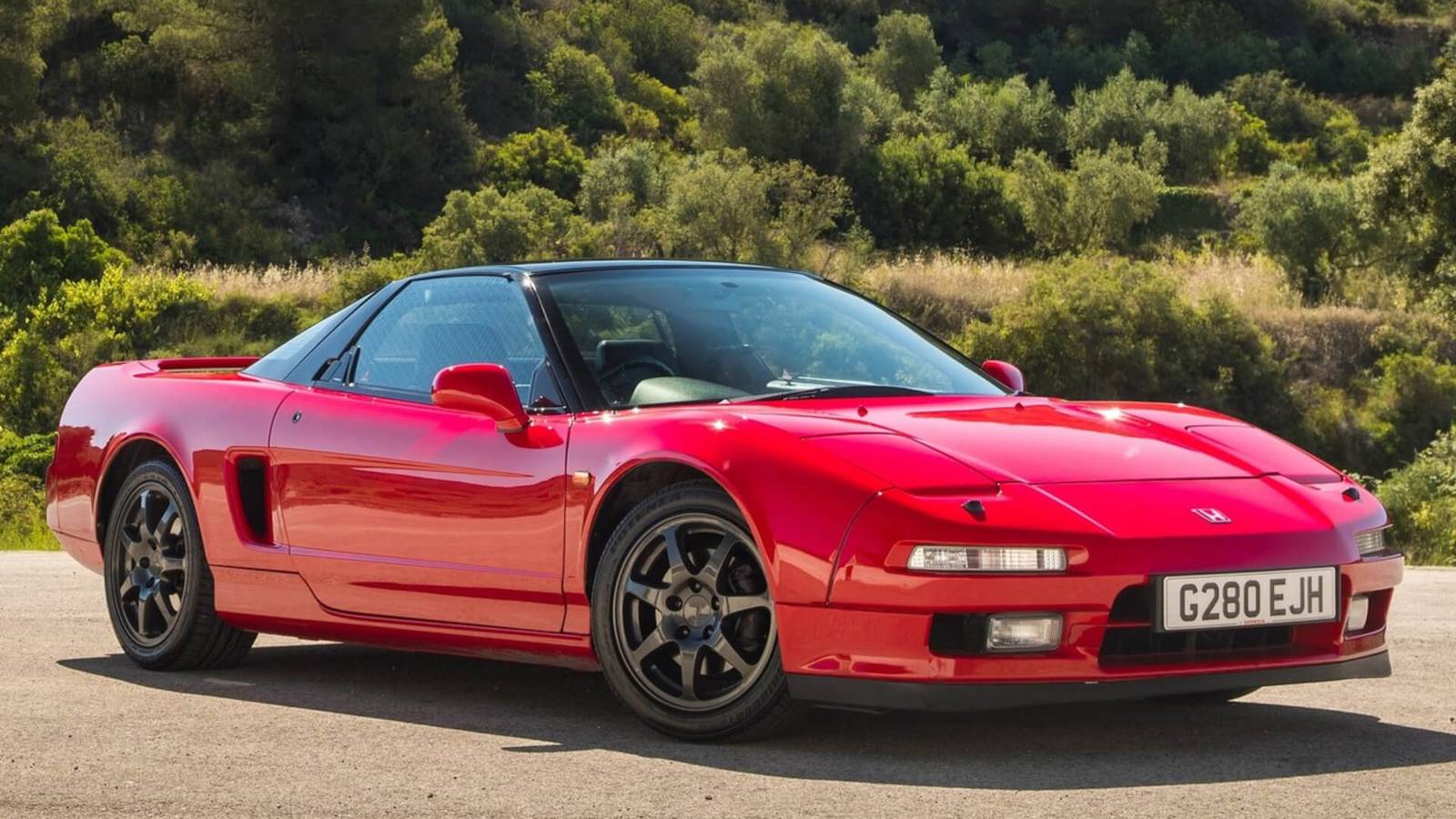
1990 Honda NSX
The Everyday Supercar

In the 1990s, supercars were characterized by two things: raw power and the fact that they were impossible to live with. The NSX, however, offered a different approach, combining supercar performance with usability. It was also light, thanks to its all-aluminum construction, a first for a production car.
While a Ferrari 348 weighed in at around 3,000 pounds and a Porsche 911 Turbo tipped the scales at over 3,200 pounds, the Honda’s curb weight was a smudge under 2,800 pounds. This weight advantage contributed to its exceptional agility and responsiveness. Its mid-mounted V6 engine, developed with input from Ayrton Senna during Honda’s partnership with McLaren, sounded good and performed even better.
But unlike many supercars of its era, the NSX was also remarkably comfortable and easy to drive, thanks to its well-tuned suspension and user-friendly controls. This combination of performance and practicality set a new standard for supercars, proving that a car could be both fun and comfortable. Merging performance with comfort and reliability meant the Honda NSX redefined the supercar world.

10 Practical Cars That Are Secret Sports Car Killers
Sports cars advertise their performance, but some cars are more covert about their unfettered power
1
1955 Citroen DS
The Pioneer of Comfort and Innovation

The Citroën DS is more than just a car; it’s a symbol of French automotive ingenuity. James May’s assertion that “any car you drive owes something somewhere to the DS” speaks volumes about the DS’s impact. Unveiled at the 1955 Paris Motor Show, the DS instantly rendered its contemporaries obsolete, selling an astounding 12,000 units on its first day.
Citroën’s engineers pursued aerodynamic excellence, crafting a teardrop shape that was both beautiful and functional. But the DS was more than just a pretty face. It was the first mass-produced car with disc brakes, a feature we now take for granted. It utilized aluminum and plastic for body panels, pioneering lightweight construction techniques. Safety was a key focus too, with features like crumple zones, rollover protection, and even a collapsible steering column.
However, the DS’s most celebrated innovation was its hydropneumatic suspension, which replaced traditional springs with spheres of nitrogen gas. This system delivered a superbly smooth ride, unmatched even by today’s standards, and provided automatic self-leveling and variable ride height. The Citroën DS truly earned its place on this list.