
Affordability and uncertainty are the buzzwords that define 2025, and they play a leading role in the auto industry as well. New cars have become more expensive than ever before, used cars followed suit, and the age of the cars on our roads has increased. Repossessions soared, while car financing periods became longer and more risky in an effort to make monthly payments more affordable.
Tariffs that came and went disrupted supply chains, and major manufacturers suffered huge losses. EV subsidies were canned, affecting Tesla as the biggest EV maker in the country, but that was not the company’s only woe. Bossman Musk’s political entanglements affected perceptions and sales. The Cybertruck, apart from several recalls and metal panels falling off, turned out to be a sales disappointment. So here is a list of controversies and highlights that defined the year 2025 in car terms, in no particular order.
Tariff Wars And Trade Disruptions

Liberation Day in the beginning of April saw new tariffs of up to 25 percent on imported vehicles, parts, and materials such as steel. This caused severe disruption in the highly globalized auto industry and paralyzed supply chains. Major OEMs like GM and Ford reported massive losses and price pressure on new vehicles.

The complex, integrated North American and global supply chains were upended, causing bottlenecks in production and forcing companies to find new sources for everything from semiconductors to raw materials. Strategic paralysis ensued, with planned investments paused. The on/off nature of these tariffs kept the industry off-balance for much of 2025.
EV Policy Reversal

The US has seen significant changes to the EV policies in 2025. Emission standards and fuel economy (CAFE) on gas cars were rolled back, and the tax credits on new and used EVs were ended in September. Government support for EV charging infrastructure was also reduced or ended. The new administration also attempted to terminate state waivers, like that in California, that enforced stricter emission rules.

The imminent end of the tax credits caused a spike in sales before September, and a slump afterwards. This shift away from EVs and towards fossil fuels had massive implications for climate goals. It also put a roadblock in the path of the US EV industry, at a time when the rest of the world, led by China, showed a significant appetite for EVs. It is creating a technological gap that will put the US at a disadvantage going forward.
The EV Enthusiasm Gap

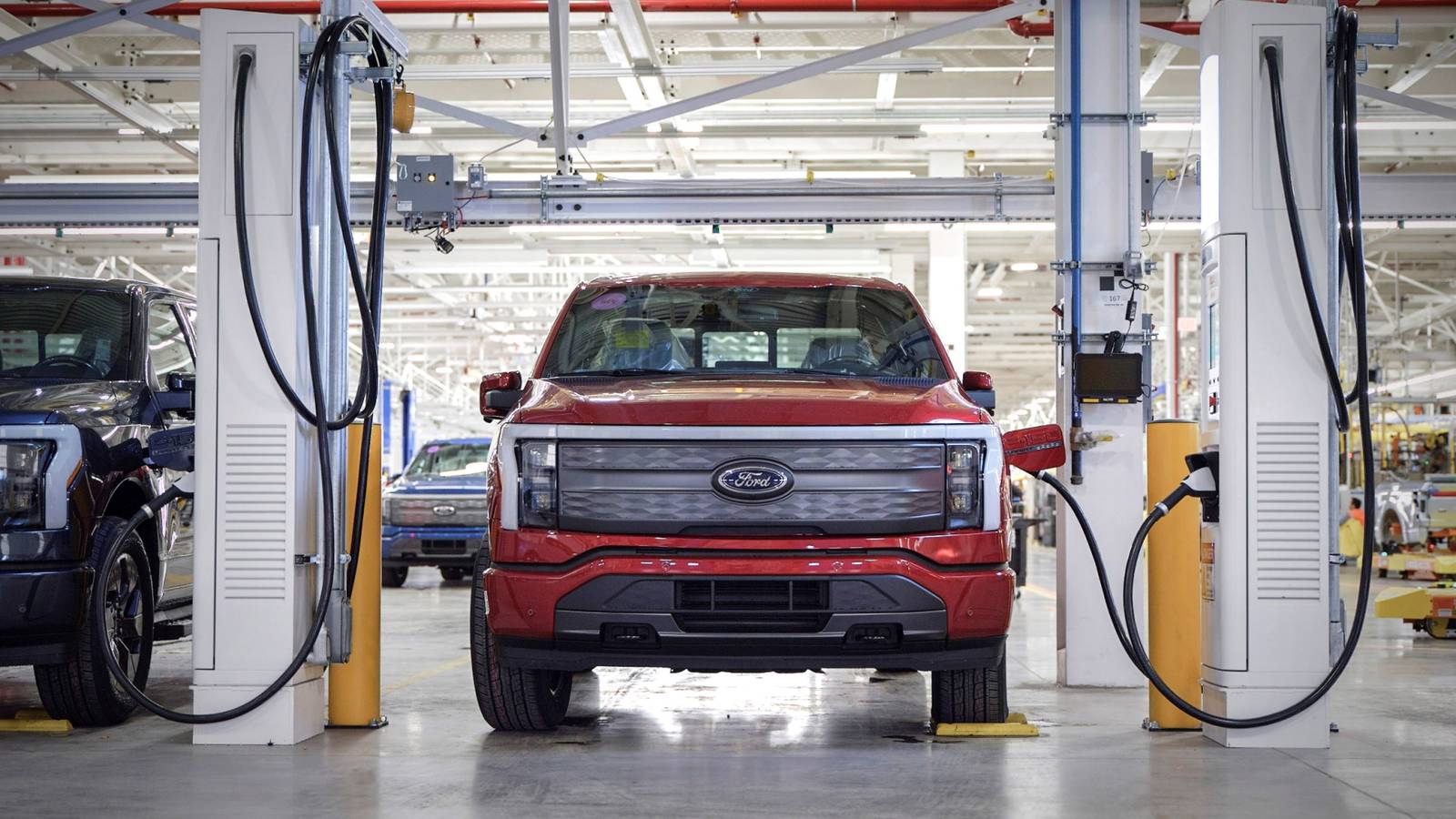
The EV enthusiasm gap in the US refers to the disparity between the expectations for EV adoption and the reality of slowing consumer demand. While sales did increase over recent years, the pace has slowed. One result was that Ford has terminated production of the F-150 Lightning.

EV sales grew to over one million in 2023, nearly 10 percent of new vehicle sales, but then showed a decline, especially in 2025. Although the US market passed the tipping point of five percent, which in countries such as Norway led to a surge in sales, the market here plateaued. A study by Cox Automotive also found a gap between consumer enthusiasm and dealer readiness, which translates to eager buyers, but dealers are not ready for sales and service.

Even Before Tariffs Have Hit, All Car Prices Are Climbing
The Trump White House recently adjusted the tariff rule book—again. One analyst says, “enough!” already.
Car Affordability Crisis And Repossessions

According to Cox Automotive, the average transaction price for new cars topped the $50,000 mark for the first time in September 2025, with very few models still available at under $30,000. This has made new cars less affordable for many buyers, and as a result, the prices of used cars have also risen sharply. The average age of cars on U.S. roads has moved closer to 13 years in 2025.

These high vehicle prices, as well as persistent inflation, and the increase in longer periods, riskier loans have pushed auto loan delinquencies and repossessions to levels last seen during the Great Financial Crisis in 2008. Although low-income families were most impacted, this trend has spread to higher-income drivers as well.
Connected Vehicle Data Privacy Concern

OnStar is a General Motors subscription-based in-vehicle safety, security, and connectivity service, with features like automatic crash response, stolen vehicle tracking, and roadside assistance, connecting drivers to live advisors or digital services via a built-in cellular connection. GM and OnStar faced allegations that they sold driver information to third parties, including consumer reporting agencies.

The data collected and shared included precise geolocation, hard braking, speeding, and late-night driving, and consumer reporting agencies used this data to create profiles, which led to insurance companies raising premiums or even denying coverage. GM has since ended the Smart Driver Program.
Rise Of Hybrid Vehicles

Sales of hybrid vehicles have been steadily increasing over the past five years, and jumped from 18 percent of light vehicle sales in 2024 to 22 percent by mid-2025. Hybrid sales were higher on the West Coast, while Texas, Florida, and the Midwest lagged.

Interest in hybrid vehicles is driven by the high prices of EVs, as well as consumer interest in better fuel consumption. The number of hybrid models on the market also increased, with Toyota changing bestselling models like the Camry and RAV4 to hybrid-only. Hyundai and Kia also offered up several very attractive hybrid options.

Have You Heard Of Zoox? It Is Attacking Tesla Where It Hurts!
Tesla and Zoox go head-to-head for market dominance in the autonomous vehicle industry, and the latter seems to be a big threat.
Advancements In Advanced Driving Assistance (ADAS) And Self-Driving

The development and use of Advanced Driver Assistance Systems (ADAS) accelerated, with features like adaptive cruise control, lane-keeping assist, and automatic emergency braking becoming standard on many 2025 models. The use of AI and improved sensor technology has made these systems more robust and safe, pushing the industry closer to higher levels of autonomy, with several vehicles, including Teslas, starting to cross the line between level 2 and 3 autonomous driving.

Waymo has offered driverless taxis in geofenced locations for a while, and in 2025, Tesla rolled out the pilot of its Robotaxi, while Amazon did the same with its Zoox.
The Software-Defined Vehicle Revolution

Software-defined vehicle transformation is changing cars from static hardware to computers on wheels, or even driveable smartphones. These cars are managed by complex software, which can be updated over the air for new features, personalized services, and improved performance.

Software-defined technology allows manufacturers to improve their vehicles over time, including ADAS, infotainment, and battery management. These vehicles offer deep personalization, seamless digital integration, and app-like functionality. It also offers subscription-based services like satellite radio, which is good, and heated seats, which are bad.
Focus On Cybersecurity

Increased connectivity created greater cybersecurity risks, comparable to any connected device, like PCs. Cybersecurity for such vehicles in the US involves significant government action, including rules restricting Chinese and Russian technology on grounds of national security risks. On the side of the automotive industry, there was a concerted push for security by design, using AI and layered defenses to ward off remote attacks, OTA update vulnerabilities, and sensor manipulation.

Manufacturers are under pressure to find new secure supply lines, while consumers are increasingly prioritizing security in their car-buying choices. Government agencies like the Bureau of Industry and Security, the NHTSA, and the US Department of Trade are all involved in combating the threats of cybersecurity.

Analysts: Trump’s Lower Fuel Efficiency Standards Won’t Save You Money
The Trump White House wants to lower fuel economy standards to make cars cheaper. But the President’s tariffs are the real reason for sticker shock.
Toyota V-8 Hybrid

While all that was happening, Toyota dropped a new sports car called the GR GT, with an advanced 4.0-liter V8 engine mounted mid-front and some level of hybrid system added as well. We all know GR stands for Gazoo Racing, and Toyota has also developed the same car into a GT3 racing car, using the same engine. Details are still vague, but horsepower estimates vary from 640 to close to 900 for the most powerful hybrid iteration.

The Toyota GR GT is not a new idea for the larger Toyota family, following on the brutal Lexus LFA of a few years back, and the Toyota 2000GT from the 1960s. The Gazoo Racing brand has strong roots in Toyota’s performance production car lineup, with the GR Supra currently defining the lineup, and the slightly insane GR Corolla taking on the Honda Civic Type-R.
Sources: COX Automotive, NHTSA